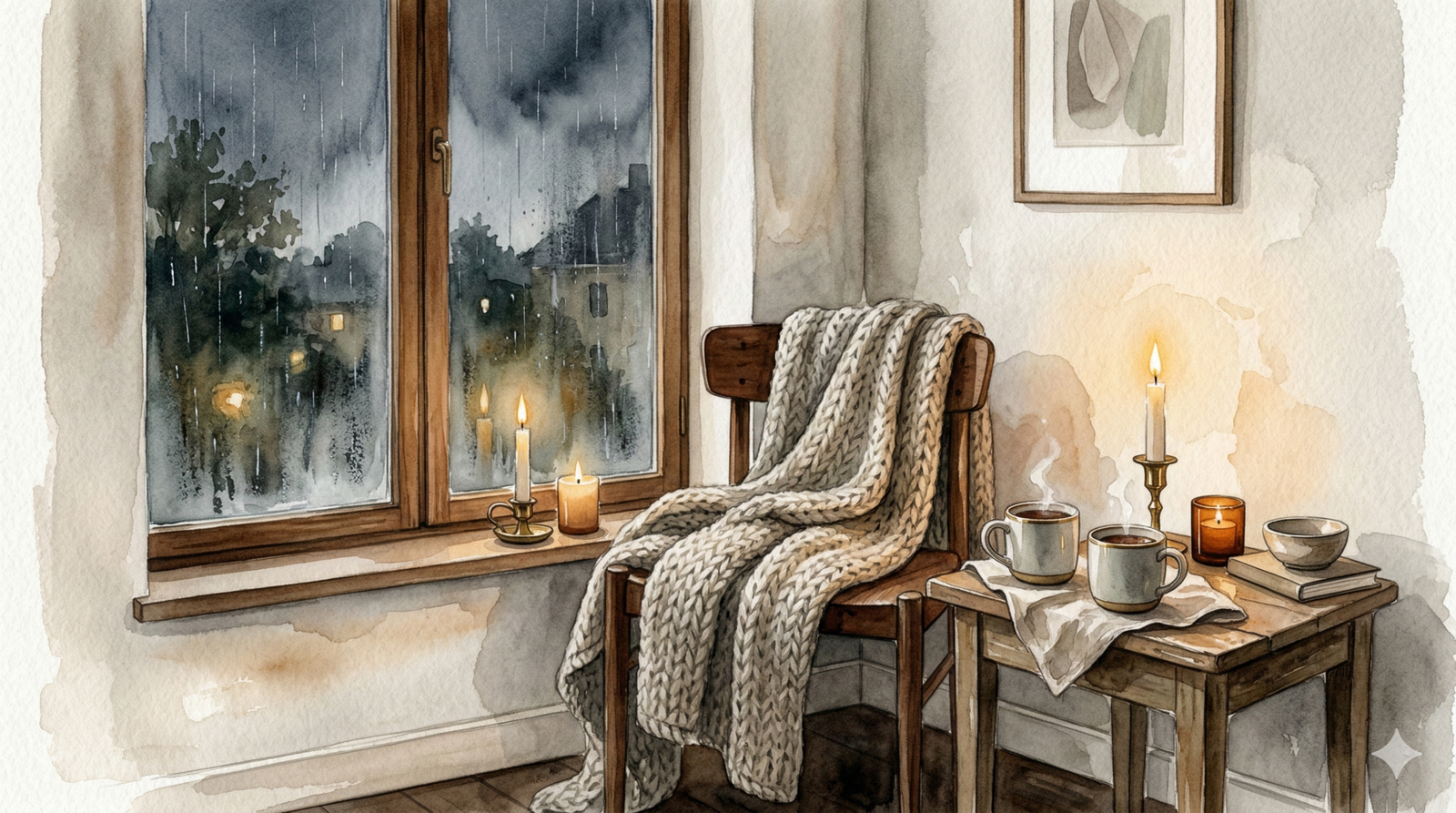
The hygge meaning captures one of the most beloved concepts in Danish culture — a warm, cozy feeling of contentment and togetherness that has no direct English equivalent. Pronounced HOO-gah, hygge describes the art of creating intimate, comfortable atmospheres where connection and simple pleasures take center stage. This untranslatable Danish word has captured the hearts of people worldwide, inspiring books, lifestyle movements, and a deeper appreciation for life’s quieter moments.
What Does Hygge Mean? The Danish Art of Cozy Living
The word hygge traces its roots to Old Norse, derived from the term hugga, meaning “to comfort” or “to console.” This linguistic ancestor also gave rise to the English word “hug,” revealing a shared heritage of warmth and protection. In modern Danish, hygge meaning extends far beyond physical comfort — it encompasses an entire philosophy of creating safe, warm spaces where people can truly relax and be present with one another. Understanding the hygge meaning requires appreciating how deeply the Danes value intentional coziness as a cultural practice.
Denmark consistently ranks among the happiest countries in the world, and many Danes credit hygge as a key ingredient in their collective well-being. During the long, dark Scandinavian winters — where daylight may last only seven hours — the Danish people have cultivated hygge as a way to find joy and connection despite harsh conditions. Picture candlelit evenings with close friends, warm woolen blankets, steaming cups of coffee, and conversations that flow without any sense of urgency. That feeling of deep contentment and belonging is the essence of hygge meaning in everyday Danish life.
Hygge shares thematic connections with several other untranslatable words in our dictionary. The Norwegian concept of friluftsliv (open-air living) complements hygge by celebrating outdoor well-being, while the Swedish tradition of fika captures a similar ritual of pausing for coffee and connection. For those drawn to the Japanese aesthetic of finding beauty in imperfection, wabi-sabi offers another perspective on appreciating life’s simple moments. The Dutch word gezellig is perhaps hygge’s closest linguistic cousin — describing that same warm, convivial atmosphere. Explore more about the cultural history of hygge and its influence on Nordic design and lifestyle.
Danish (Hygge) · Lifestyle & Well-being
Pronunciation: HOO-gah
“A quality of coziness and comfortable conviviality that engenders a feeling of contentment or well-being.”
What Does Hygge Mean?
Hygge (pronounced HOO-gah) is a Danish and Norwegian word that describes a mood of coziness, comfort, and warmth. But it goes far beyond just being cozy — hygge is a fundamental part of Danish culture and a way of life that celebrates the simple pleasures of existence.
There is no direct English translation for hygge, which is precisely what makes it a “lost word.” The closest approximations — coziness, comfort, togetherness — each capture only a fragment of what hygge truly means. It is the feeling you get when you are curled up on a sofa with a loved one, sipping hot chocolate, while rain patters against the window. It is the warmth of candlelight on a dark winter evening. It is the joy of a simple meal shared with close friends.
The Cultural Roots of Hygge
Denmark consistently ranks among the happiest countries in the world, and many Danes attribute this to their embrace of hygge. The word first appeared in Danish writing around the early 19th century, though the concept has been woven into Scandinavian life for centuries.
The long, dark Nordic winters — where daylight can dwindle to just seven hours — created a deep cultural need for warmth, light, and togetherness. Hygge emerged as the antidote to darkness, a deliberate practice of creating joy in the everyday.
Etymologically, hygge is believed to come from a 16th-century Norwegian word meaning “to comfort” or “to console,” which is related to the English word “hug.” This linguistic connection beautifully captures the essence of the word — hygge is, in many ways, an emotional embrace.
How to Experience Hygge
While hygge is a feeling, there are certain elements that Danes associate with creating hyggelig (the adjective form) moments:
- Candles: Denmark burns more candles per capita than any other nation. The soft, warm glow is considered essential to hygge.
- Warm drinks: Coffee, hot chocolate, mulled wine — anything that warms you from the inside out.
- Comfort food: Freshly baked pastries, slow-cooked stews, cinnamon rolls. Nothing too elaborate — simplicity is key.
- Togetherness: Hygge is best shared. Small gatherings with close friends or family, intimate conversations, board games by the fire.
- Soft textures: Wool blankets, thick socks, oversized sweaters. The physical sensation of warmth and softness.
- Nature: A walk through autumn leaves, watching snowfall, sitting by a lakeside in summer.
- Gratitude: Being present in the moment, appreciating what you have, letting go of what you don’t.
Hygge in Everyday Life
What makes hygge truly special is its accessibility. It is not about expensive purchases or elaborate preparations. A rainy afternoon spent reading a book under a blanket is hygge. Making dinner with a friend while music plays softly in the background is hygge. Even a quiet moment alone with a cup of tea and a flickering candle is hygge.
In Denmark, hygge is not reserved for special occasions — it is a daily practice. Danish homes are designed with hygge in mind, featuring warm lighting, natural materials, and comfortable spaces. The workplace, too, embraces hygge, with many offices incorporating cozy break rooms and communal coffee rituals.
Why We Need Hygge
In our hyperconnected, always-on world, hygge offers a radical counterpoint. It is an invitation to slow down, to be present, to find beauty in simplicity. It reminds us that happiness is not found in the extraordinary but in the ordinary — in the warmth of a shared meal, the comfort of a familiar space, the peace of a quiet evening.
Perhaps this is why hygge has resonated so deeply around the world. It gives us permission to pause, to nurture ourselves and our relationships, and to find contentment in the simple act of being together.
Whether you are new to Scandinavian culture or a lifelong word enthusiast, understanding the hygge meaning opens a window into how the Danish people have mastered the art of everyday happiness. The hygge meaning is not about luxury or extravagance — it is about the warmth of a shared meal, the glow of candlelight on a winter evening, and the comfort of knowing you are exactly where you belong. This is what makes hygge meaning so universal: every culture has moments of quiet togetherness, but the Danes gave it a name.