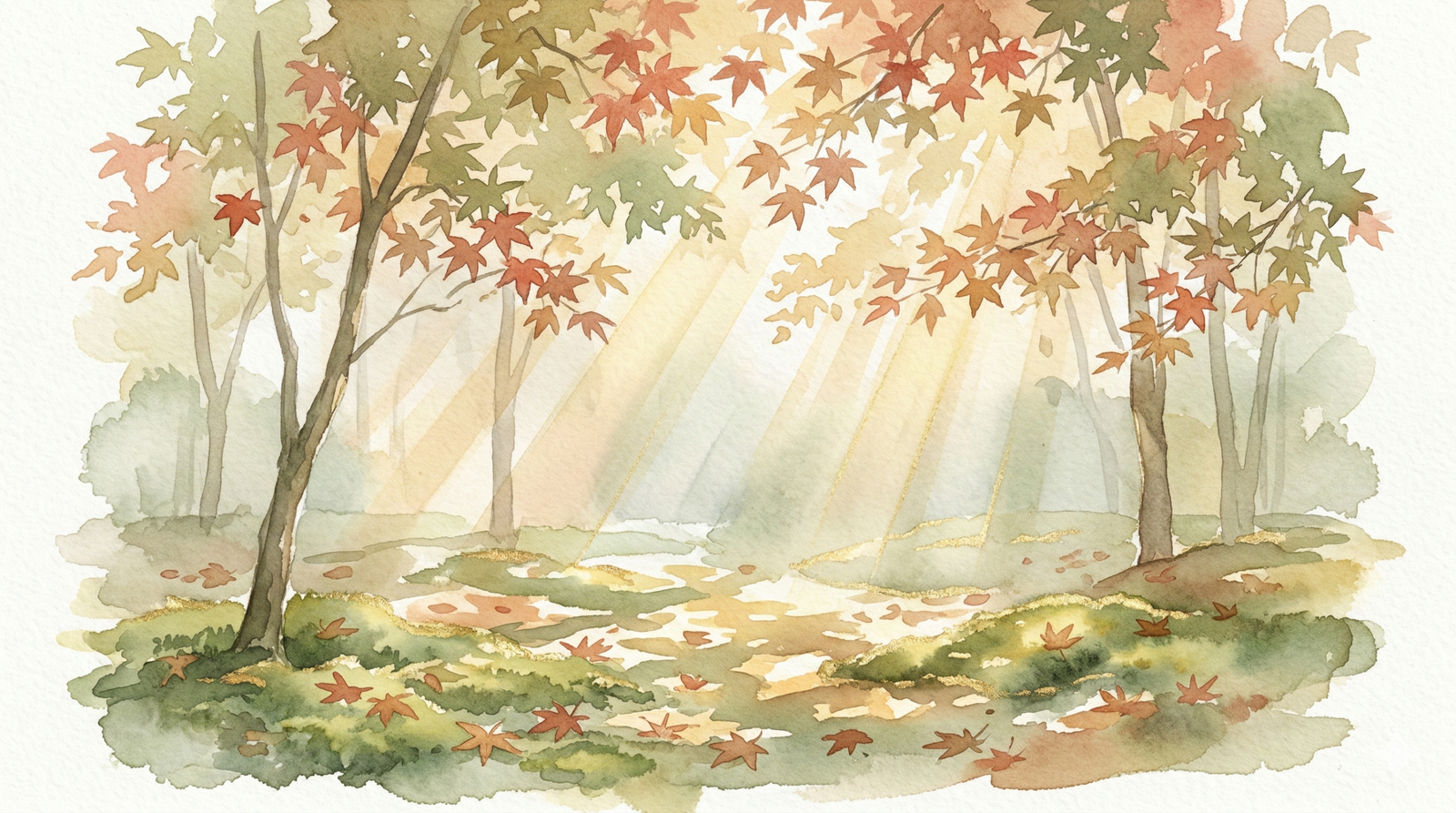
The komorebi meaning is one of the most visually poetic concepts in the Japanese language — it describes the interplay of sunlight filtering through leaves, creating dappled patterns of light and shadow on the ground below. This untranslatable Japanese word captures a moment of natural beauty that most languages need an entire sentence to express. The komorebi meaning goes beyond simple description; it embodies the Japanese sensitivity to fleeting, ephemeral beauty in nature.
What Does Komorebi Mean? 3 Layers of Japanese Forest Light
The komorebi meaning is built from three kanji characters: 木 (ko, tree), 漏れ (more, to leak through), and 日 (bi, sun or day). Together, they paint a picture of sunlight leaking through trees — a literal translation that perfectly captures the visual phenomenon. This etymology reveals how Japanese linguistic structure allows complex natural observations to be compressed into a single, elegant word. Understanding the komorebi meaning through its components shows how the Japanese language treats nature not as backdrop, but as the main character in everyday experience.
In Japanese culture, komorebi is deeply connected to the aesthetic concept of mono no aware — the bittersweet awareness of impermanence. Forest bathing (shinrin-yoku), a practice now recognized worldwide for its health benefits, relies heavily on the komorebi experience. Walking through a Japanese forest like Yakushima’s ancient cedar groves or Kyoto’s bamboo paths, the shifting patterns of komorebi create a meditative quality that the Japanese have treasured for centuries. The word appears frequently in Japanese poetry, literature, and photography, often used to evoke a sense of peaceful solitude and connection with the natural world.
Komorebi shares thematic connections with several other untranslatable words in our dictionary. The Japanese concept of wabi-sabi celebrates the beauty of imperfection in similar natural moments, while yūgen captures the profound mystery that komorebi light can evoke. The German word waldeinsamkeit describes the solitary feeling of being in a forest where komorebi might be found, and the Norwegian concept of friluftsliv embraces this kind of outdoor communion with nature. For more on Japanese aesthetics, see the Wikipedia article on komorebi.
Whether you encounter komorebi during a morning walk through a wooded park or glimpse it through a canopy of autumn leaves, the komorebi meaning reminds us that some of nature’s most beautiful moments are the ones we rarely stop to name. This Japanese word invites us to slow down, look up, and appreciate the play of light that happens every day in forests around the world — a universal experience that only the Japanese language has given its own beautiful name.
Japanese (木漏れ日) · Nature & Environment
Pronunciation: koh-moh-REH-bee
“The interplay of sunlight filtering through leaves, creating dancing patterns of light and shadow on the ground below.”
What Does Komorebi Mean?
Komorebi (木漏れ日) is a Japanese word that describes the interplay of sunlight filtering through the canopy of trees. It captures that magical moment when rays of light pierce through leaves, creating dappled, dancing patterns of gold and shadow on the forest floor.
The word is composed of three kanji characters: 木 (ko, tree), 漏れ (more, leaking/filtering through), and 日 (bi, sun/light). Together they paint a vivid picture — sunlight leaking through trees — that encapsulates an entire sensory experience in a single word.
A Word Born from Nature
Japan’s deep cultural connection to nature — expressed through concepts like shinrin-yoku (forest bathing) and the reverence for cherry blossoms — gives rise to a vocabulary rich in natural observation. Komorebi is perhaps the most poetic example of this tradition.
The phenomenon itself is universal — anyone who has walked through a forest on a sunny day has experienced komorebi. But only the Japanese language has given it a name, elevating a fleeting visual experience into a concept worthy of contemplation and celebration.
The Science of Komorebi
There is a scientific basis for the calming effect of komorebi. The shifting patterns of light and shadow stimulate gentle eye movement and engage our attention without demanding concentration — what psychologists call “soft fascination.” This state promotes relaxation and mental restoration.
Research on forest bathing has shown that spending time among trees lowers cortisol levels, reduces blood pressure, and boosts immune function. Komorebi — with its gentle, ever-shifting play of light — is an essential part of this restorative experience.
Finding Komorebi
To experience komorebi, find a forest or tree-lined path on a sunny day. Look up through the canopy and notice how the light filters through the gaps between leaves. Watch how the patterns shift and dance with the breeze. Notice the warmth where the light touches your skin and the coolness of the shadows.
In our screen-saturated world, komorebi reminds us that nature offers a kind of beauty that no digital display can replicate — living, breathing, constantly changing, and deeply healing.