Spanish
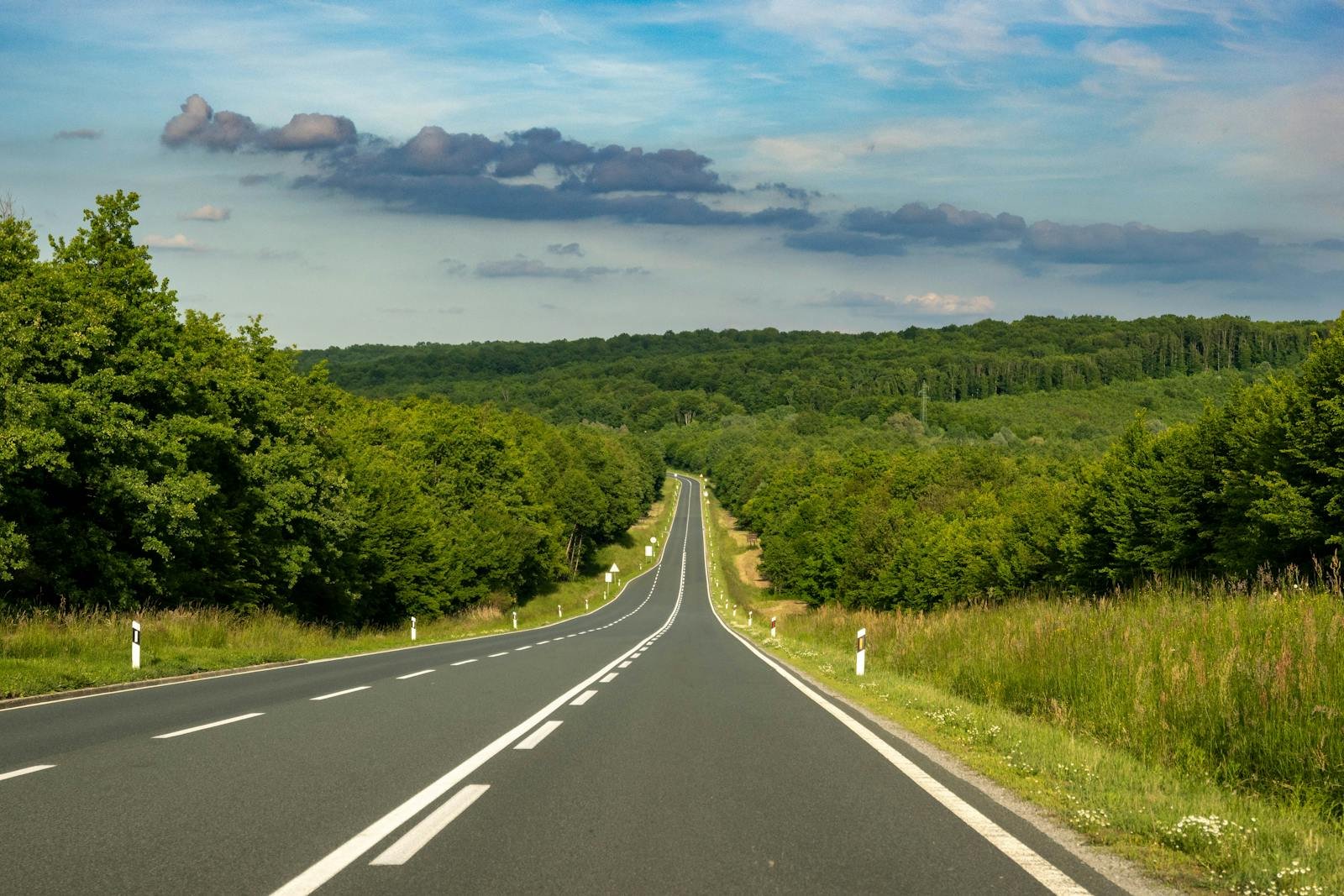
Vacilando meaning: the Spanish word for traveling without a fixed destination — where the experience of moving matters more than where you arrive. Below: the etymology of Vacilando, the cultural and literary roots, modern usage in slow-travel writing, and why English has no equivalent.
/ba.θiˈlan.do/ (Castilian) /ba.siˈlan.do/ (Latin American) — bah-thee-LAHN-doh / bah-see-LAHN-doh
Literal translation: “wavering, hesitating, swaying” — the present participle of vacilar (“to vacillate, to sway, to hesitate”). The word names a kind of motion that has direction without urgency, intention without destination — movement as a form of attention rather than as a way of getting somewhere.
Etymology of Vacilando
Vacilar descends from Latin vacillare, “to sway, totter, waver,” whose ultimate root is uncertain but probably onomatopoeic — the sound of something rocking back and forth on a loose axis. The verb gave Spanish, Italian, and English their respective branches: Italian vacillare, French vaciller, English vacillate. In all three Romance descendants the everyday meaning is “to hesitate,” with a faint wobble of indecision. In Spanish, however, the present participle vacilando developed a second life that the cognates never picked up.
This second life is travel-related. By the early twentieth century, Spanish-speaking travelers in the Americas were using vacilando to describe a particular kind of wandering — not lost, but not aiming at any specific place either. The word picked up the connotation of unhurried, attentive movement: walking the long way home, taking the bus to the end of its route, riding without checking the time. The semantic drift is small but important. The Latin vacillare was about uncertainty in a single spot; the Spanish vacilando is about a kind of certainty that there is no rush.
The word entered English literary vocabulary in 1962 through John Steinbeck’s Travels with Charley, in which he devotes a careful paragraph to the term: vacilando, he writes, names a way of going somewhere where the destination is honestly less important than the going. Steinbeck’s translation has been quoted in travel writing ever since, and his definition fixed the word’s English-language meaning as “the philosophy of slow travel” — a usage that is now nearly as common as the literal Spanish.
Cultural Context
Vacilando lives at the intersection of Spanish-language travel writing and a long Mediterranean tradition of unhurried movement: the Italian passeggiata, the Portuguese sobremesa, the Spanish paseo. All four name some version of the same insight — that being in motion, or being at rest, can itself be the point. Vacilando is the most ambitious of the four because it applies the principle to long-distance travel, not just an after-dinner walk.
Latin American Spanish has carried the term especially well. Mexican and Cuban writers use it in road-trip narratives and beachfront memoirs; Argentine and Chilean travel writers use it to describe the long bus journeys of Patagonia. The word is also at home in the literature of el viaje sin destino fijo — the journey without fixed destination — a genre that runs from Cervantes’ wandering knight through Roberto Bolaño’s late novels and into contemporary slow-travel blogs.
Vacilando also carries a quiet philosophical edge. To travel vacilando is to refuse one of the modern world’s strongest pressures: the assumption that movement must be optimized for arrival. The vacilando traveler chooses inefficiency on purpose, and the word names the choice. There is something gently subversive about it — a Spanish-language counterargument to the airport, the GPS, the punctual train.
How Vacilando Is Used Today
Vacilando shows up in Spanish-language travel writing, slow-travel blogs, the names of small guesthouses and café-bookshops in Mexico and Spain, and the kind of dinner-table conversation where someone is trying to explain why their two-week vacation took six. It travels into English usage primarily through Steinbeck’s quotation, and from there into design magazines, philosophy of travel pieces, and the marketing copy of a particular kind of small slow-tourism operator.
Pasamos toda la tarde vacilando por las calles del barrio antiguo, sin ningún plan.
— “We spent the whole afternoon vacilando through the streets of the old town, without any plan.”
Why English Has No Equivalent for Vacilando
English reaches for “wandering,” “ambling,” “meandering,” “drifting.” Each gets close and each falls short. “Wandering” implies aimlessness, which is wrong — vacilando has direction, just no destination. “Ambling” describes the speed but not the spirit. “Meandering” is a word borrowed from rivers, and it imports an unwanted suggestion of inefficiency. “Drifting” is too passive: it suggests being moved by current rather than choosing your own slow pace. Vacilando holds all of those nuances at once: deliberate, attentive, unhurried, in motion. English has the feeling but no single word for it.
Related Words
- For the equally unhurried Italian post-meal walk — vacilando’s closest Mediterranean cousin — see dolce far niente, the sweetness of doing nothing.
- For the German word for the ache to be elsewhere that often sets travelers vacilando in the first place, see fernweh.
- For the longing-for-home that arrives partway through a vacilando journey, see hiraeth.
- For the Portuguese word for the long, lingering sit at the table after dinner — the rest from which vacilando is the action equivalent — see sobremesa.
- Browse more from the same vocabulary in our Spanish collection.
Further Reading
- Real Academia Española — vacilar (the official Spanish dictionary’s entry on the parent verb, including the wavering and traveling senses).
- Etymonline — vacillate (the Latin vacillare root that the Spanish travel meaning grew from).