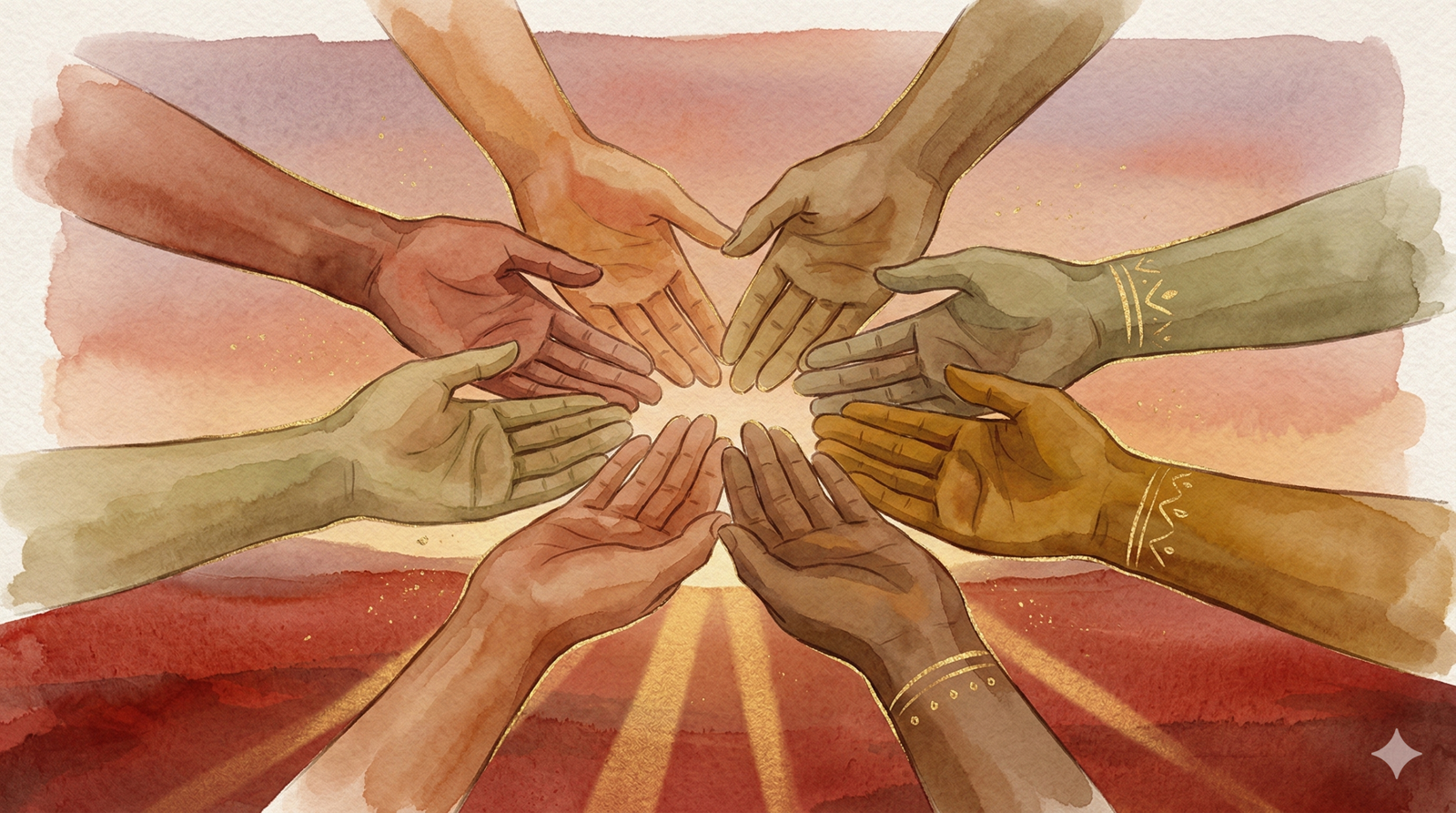
The ubuntu meaning represents one of the most powerful philosophical concepts to emerge from Southern Africa — “I am because we are,” the belief that a person exists through their relationships with others and shared humanity. The ubuntu meaning transcends simple kindness or community spirit; it describes a fundamental worldview in which individual identity is inseparable from collective belonging. Archbishop Desmond Tutu famously explained that a person with ubuntu is open, available to others, and affirming of others — because they understand that they belong to a greater whole.
What Does Ubuntu Mean? 4 Pillars of African Humanism
The ubuntu meaning is rooted in the Nguni Bantu language family, shared across Zulu, Xhosa, and related languages. The word breaks down into the prefix ubu-, which denotes abstract being or essence, and the stem -ntu, meaning “person” or “human.” Together, the ubuntu meaning literally translates to “humanness” or “the quality of being human.” The fuller expression umuntu ngumuntu ngabantu translates to “a person is a person through other persons.” This linguistic structure reveals that the ubuntu meaning is not about individual virtue but about a relational understanding of what it means to be human — your humanity is defined by how you relate to others.
Ubuntu is not merely an abstract philosophy but a living practice that shaped governance, justice, and daily life across Southern Africa for centuries. Traditional conflict resolution through ubuntu emphasizes restorative rather than punitive justice — healing relationships rather than punishing individuals. This principle became globally significant during South Africa’s Truth and Reconciliation Commission, where ubuntu informed the revolutionary approach of seeking understanding and forgiveness rather than retribution after apartheid. In everyday life, the ubuntu meaning manifests in the practice of sharing resources with neighbors, welcoming strangers, and the understanding that one person’s suffering diminishes the entire community. Nelson Mandela described ubuntu as the profound sense that “we are human only through the humanity of others.”
Ubuntu connects to other untranslatable words about human connection and community. The Dutch concept of gezellig captures the warmth of social togetherness, while the Greek meraki describes pouring one’s soul into work that serves others. The Japanese ikigai finds purpose through contribution to community, and the Danish hygge creates belonging through intimate gatherings. For deeper exploration, see Wikipedia’s comprehensive overview of ubuntu philosophy.
The ubuntu meaning carries urgent relevance in an increasingly fragmented world. As societies grapple with isolation, inequality, and division, the ubuntu meaning offers a radical alternative — the understanding that my well-being is inextricably bound to yours. The ubuntu meaning challenges the Western emphasis on rugged individualism and suggests that true flourishing can only happen in community. For anyone seeking a word that captures the deepest truth about human interdependence, the ubuntu meaning stands as one of the most important concepts any language has ever produced.
Zulu / Xhosa (Nguni Bantu)
oo-BOON-too
“”I am because we are” — the belief that a person exists through their relationships with others and shared humanity”
Literal Translation
Often translated as “humanity toward others” or “I am what I am because of who we all are”
Cultural Context
Ubuntu is one of the foundational philosophical concepts of Southern African culture. It was made famous worldwide by Archbishop Desmond Tutu and Nelson Mandela, who both invoked ubuntu as a guiding principle during South Africa’s transition from apartheid. Tutu described a person with ubuntu as someone who is “generous, hospitable, friendly, caring and compassionate.” The concept suggests that our humanity is bound up in one another — that we cannot be fully human alone. It influenced the Truth and Reconciliation Commission’s approach to restorative rather than punitive justice.
When Would You Use It?
Ubuntu is invoked when communities come together to support someone in need, when forgiveness is chosen over revenge, or when someone acts for the collective good rather than personal gain. It’s the recognition that your well-being is fundamentally connected to the well-being of everyone around you.
Related Words
Gezellig (Dutch), Hygge (Danish), Mudita (Sanskrit)
Want to Learn Zulu?
Discover more beautiful Zulu words and phrases. Start your language journey today.
📬 Get a Beautiful Untranslatable Word in Your Inbox Every Week
Join fellow word lovers and discover words that English forgot.