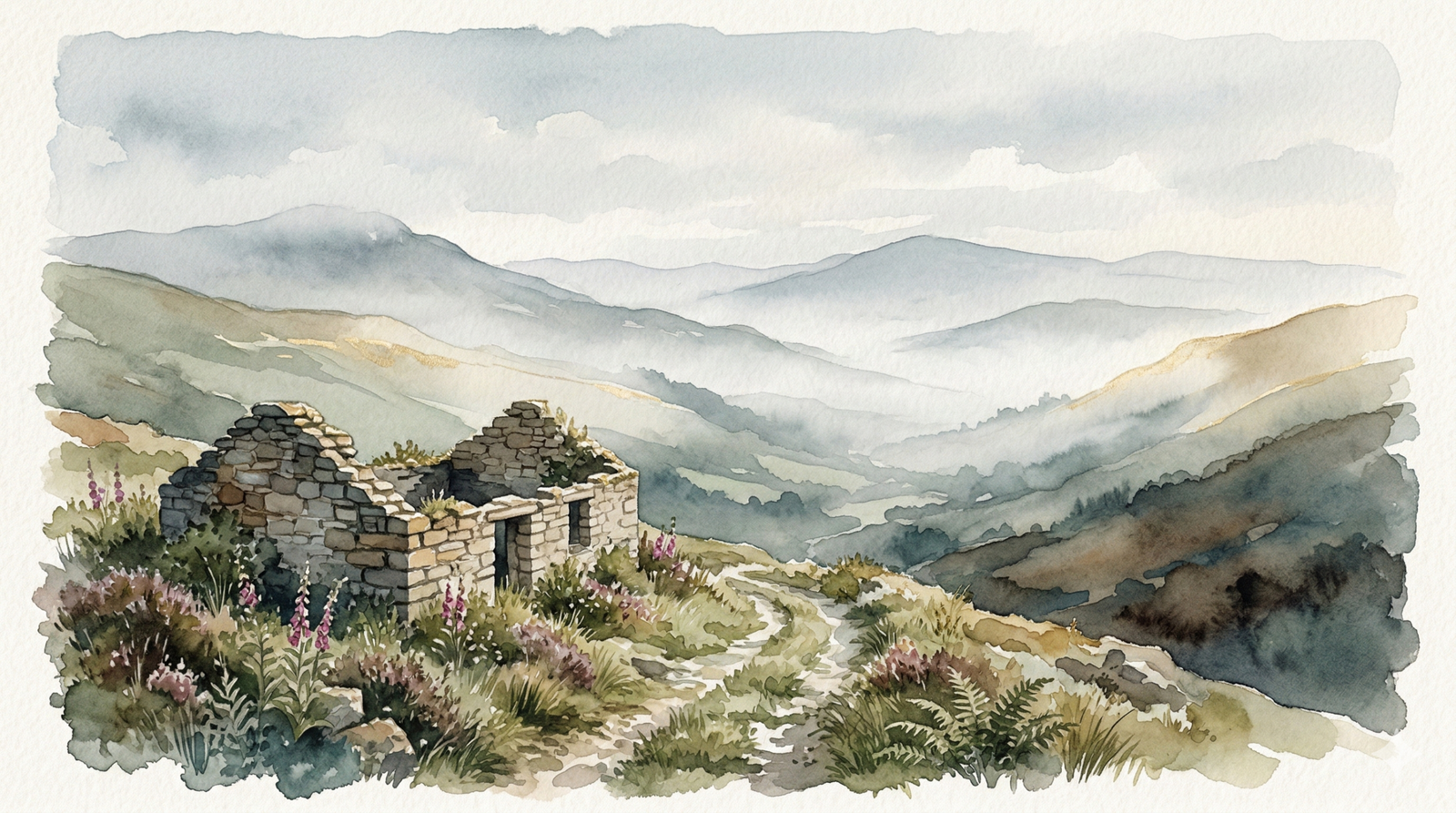
The hiraeth meaning describes one of the most poignant emotions in the Welsh language — a deep, soul-stirring longing for a home you can never return to, or perhaps one that never truly existed. The hiraeth meaning goes beyond ordinary homesickness; it encompasses grief for lost places, vanished times, and departed loved ones, all wrapped in a bittersweet yearning that is central to Welsh identity. For the Welsh diaspora scattered across the world, hiraeth is not just a word but a lived experience that connects them to their ancestral homeland.
What Does Hiraeth Mean? 5 Dimensions of Welsh Longing
The hiraeth meaning has ancient Celtic roots that reveal its profound depth. The word likely derives from the Proto-Celtic *sīr- (long) combined with elements suggesting yearning or seeking, though its exact etymology remains debated among linguists — appropriately, given that hiraeth itself resists precise definition. In Middle Welsh texts, hiraeth appears frequently in poetry and prose, often connected to exile and the aching desire for cynefin (one’s familiar place or habitat). The hiraeth meaning has remained remarkably consistent over centuries: a deep, persistent longing that mingles sadness with a strange, tender beauty. Some scholars connect the word to the concept of hir (long) in Welsh, suggesting a longing that stretches across great distances of both time and space.
Hiraeth occupies a sacred place in Welsh cultural identity, woven into the fabric of poetry, music, and national consciousness. Welsh choral traditions — from Myfanwy to the hymns of the Eisteddfod — are saturated with hiraeth, their haunting harmonies giving voice to centuries of longing. The concept gained particular intensity during the Industrial Revolution when thousands of Welsh-speaking families left their rural communities for coal mining towns, and again during waves of emigration to Patagonia, America, and Australia. Even today, the hiraeth meaning resonates with anyone who has ever felt the ache of being separated from a beloved landscape, a lost childhood, or a way of life that can never be recovered. In Welsh-speaking communities, hiraeth is understood as something positive — a sign of deep emotional attachment and cultural rootedness.
Hiraeth shares emotional territory with other untranslatable words about longing and nostalgia. The Portuguese saudade captures a similar bittersweet yearning for something absent, while the Russian toska describes a deeper, more existential anguish. The German fernweh channels longing outward toward distant places, and the Romanian dor expresses an aching love for what is far away. For more on Welsh linguistic heritage, see Wikipedia’s exploration of hiraeth.
The hiraeth meaning speaks to a universal human experience that transcends Welsh culture — the knowledge that certain precious things are gone forever, yet remain alive in our hearts. In our age of constant mobility and rapid change, the hiraeth meaning offers language for the quiet grief of leaving behind the places and people that shaped us. The hiraeth meaning validates the feeling that somewhere, there is a place where we truly belong — even if that place exists only in memory, dream, or the deepest chambers of the heart.
Welsh
HEER-eyeth
“A deep longing for a home you can never return to — or perhaps one that never truly existed”
Literal Translation
Sometimes translated as “homesickness,” but this vastly undersells its depth. It combines longing, nostalgia, and grief for a lost place or time
Cultural Context
Hiraeth is considered one of the most important words in the Welsh language and is deeply tied to Welsh national identity. For centuries, waves of Welsh emigration — to Patagonia, to the coalfields of Pennsylvania, to the cities of England — created generations who carried hiraeth in their hearts. But the word goes beyond missing a physical place. It can refer to longing for a Wales that existed before industrialization, for the Welsh language itself as it faced decline, or for a mythic homeland that lives only in collective memory. Welsh poets and musicians have explored hiraeth for centuries, and it remains central to Welsh cultural expression.
When Would You Use It?
You might feel hiraeth when you return to the town where you grew up and find it completely changed. Or when you hear a song from your childhood and ache for a time you can never recapture. It’s the longing not just for a place, but for the person you were when you were there.
Related Words
Saudade (Portuguese), Toska (Russian), Fernweh (German), Natsukashii (Japanese)
Want to Learn Welsh?
Discover more beautiful Welsh words and phrases. Start your language journey today.
📬 Get a Beautiful Untranslatable Word in Your Inbox Every Week
Join fellow word lovers and discover words that English forgot.