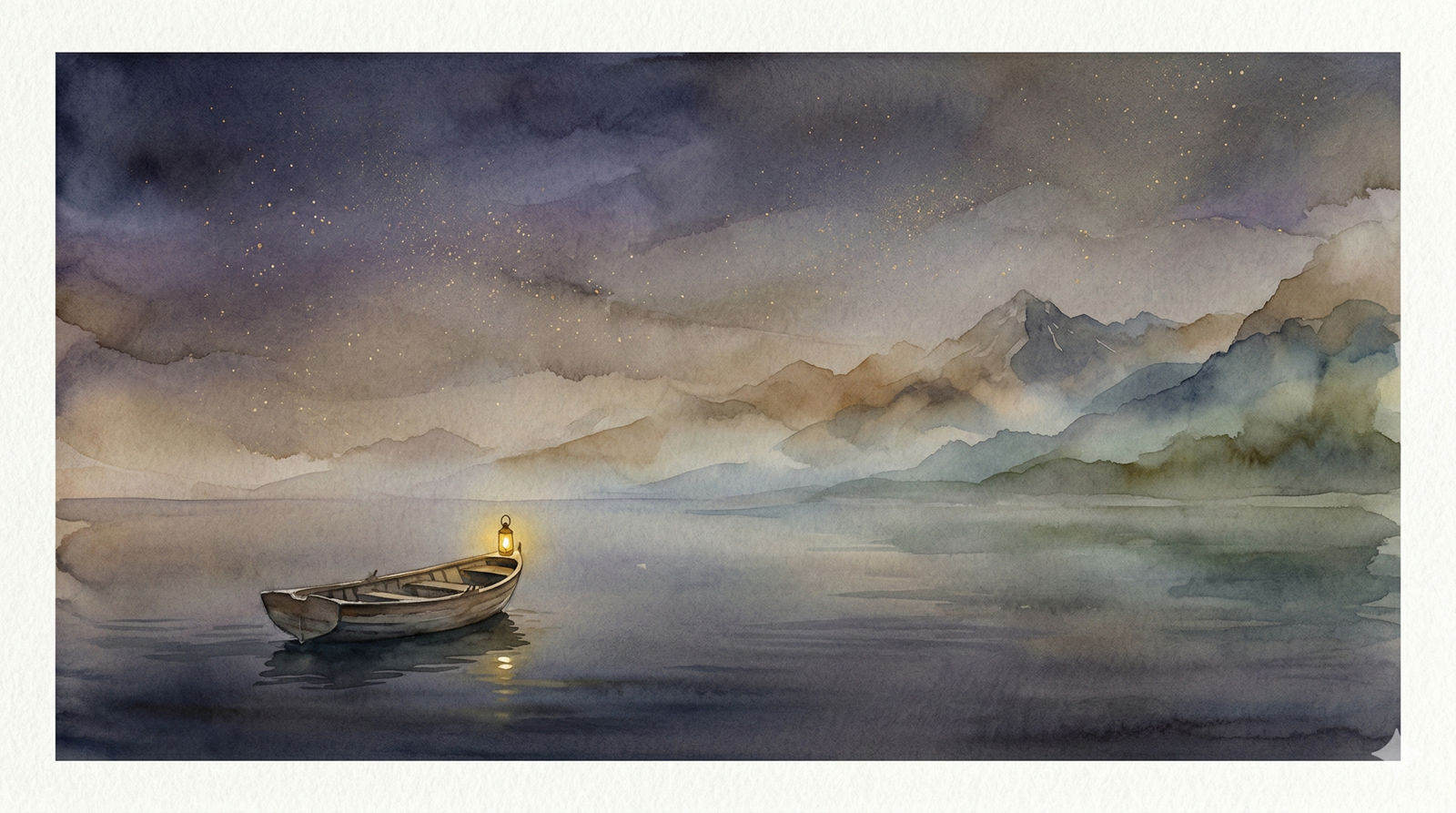
The yugen meaning refers to one of the most beautiful and untranslatable concepts in Japanese aesthetics — a profound, mysterious awareness of the beauty and complexity of the universe that triggers a deep emotional response too powerful for words. Rooted in Zen Buddhist philosophy, yugen (幽玄) captures the feeling of gazing at a sunset that dissolves into infinite sky, or sensing the vastness of the cosmos in a single falling leaf. This untranslatable Japanese word has no direct English equivalent, making it a treasured entry in the lexicon of words that defy translation.
What Does Yugen Mean? Understanding This Japanese Untranslatable Word
To truly understand the yugen meaning, we must trace its origins through centuries of Japanese philosophical thought. The word combines two kanji characters: 幽 (yū), meaning “dim,” “deep,” or “mysterious,” and 玄 (gen), meaning “dark” or “profound.” Together, they form a compound that literally translates to “mysterious darkness” or “profound subtlety” — yet this barely scratches the surface of what yugen truly conveys. In classical Japanese poetry and Noh theater, yugen describes the beauty that lies beneath the surface of things, the suggestion of depths that cannot be fully expressed or understood.
The concept of yugen has shaped Japanese artistic traditions for over eight centuries. The great Noh master Zeami Motokiyo (1363–1443) considered yugen the highest ideal of artistic expression, describing it as “a white bird with a flower in its beak.” In Japanese poetry, particularly haiku and waka, yugen captures the feeling evoked by autumn moonlight filtering through clouds, the cry of a distant bird over a darkening sea, or mist rising silently from mountain valleys at dawn. It is the beauty that emerges from mystery and depth rather than from clarity or brightness.
Yugen shares thematic territory with other untranslatable words in our dictionary. The Japanese concept of wabi-sabi finds beauty in imperfection and impermanence, while komorebi captures the specific beauty of sunlight filtering through leaves. The Portuguese word saudade and the Welsh hiraeth share yugen’s melancholic undertone — a bittersweet awareness that some of life’s deepest truths lie just beyond the reach of language. Together, these words form a constellation of concepts that remind us how much of human experience remains unnamed in English. For those interested in the philosophical underpinnings of yugen, the Encyclopedia Britannica’s entry on yugen offers an excellent overview of its role in Japanese aesthetics.
When we explore the yugen meaning more deeply, we find it is not simply a word but a lens through which to experience the world. Understanding the yugen meaning transforms the way we perceive everyday moments — a foggy morning becomes a doorway to the infinite, and silence between musical notes becomes as meaningful as the notes themselves. This is what makes yugen one of the most cherished untranslatable words in the Japanese language and a concept that continues to inspire artists, poets, and philosophers worldwide.
Japanese
YOO-gen
“A profound, mysterious awareness of the beauty and complexity of the universe that triggers a deep emotional response too powerful for words”
Literal Translation
Composed of 幽 (yū, “dim/deep/mysterious”) + 玄 (gen, “dark/profound”) — literally “mysterious darkness” or “profound subtlety”
Cultural Context
Yūgen is one of the most important aesthetic concepts in Japanese culture, originating in Chinese philosophy and later becoming central to Japanese art, poetry, and Zen Buddhism. In the context of Noh theater, yūgen refers to the beauty of restraint — what is suggested but not shown. The great Noh master Zeami described yūgen as “a white bird with a flower in its beak.” In poetry, particularly haiku and waka, yūgen captures the feeling evoked by autumn moonlight, the cry of a distant bird, or mist rising from mountains. It’s beauty that comes from mystery and depth rather than from clarity or decoration.
When Would You Use It?
Standing on a cliff at twilight, watching the sun dissolve into an ocean that stretches beyond comprehension. Feeling simultaneously small and connected to something infinite. The beauty isn’t just visual — it resonates somewhere deep in your being, beyond what language can reach. That overwhelming yet quiet wonder is yūgen.
Related Words
Wabi-Sabi (Japanese), Mono no Aware (Japanese), Komorebi (Japanese)
Want to Learn Japanese?
Discover more beautiful Japanese words and phrases. Start your language journey today.
📬 Get a Beautiful Untranslatable Word in Your Inbox Every Week
Join fellow word lovers and discover words that English forgot.