Japanese | 浮世
Pronunciation: /ɯ.ki.jo/
Literal translation: uki (浮き) — “floating,” “transient” + yo (世) — “world,” “age,” “life.” The floating world.
Etymology
The word ukiyo (浮世) carries one of the most remarkable semantic histories in the Japanese language. Its origins lie in an older, homophonous compound: 憂き世 (uki-yo), where the first character is written with the kanji for “grief” or “sorrow” (憂) rather than “floating” (浮). In this Buddhist reading, ukiyo described the mortal world as a realm of suffering and impermanence — a place of attachment and loss that the enlightened mind should seek to transcend. The concept aligned closely with the Sanskrit dukkha, the unsatisfactory and transient nature of earthly existence that stands at the heart of Buddhist teaching.
The transformation came during the Edo period (1603–1868), a prolonged era of domestic peace and urban prosperity that reshaped Japanese cultural life. The merchant and artisan classes of cities like Edo — people who lived outside the rigid hierarchy of the samurai — began to reinterpret the old Buddhist sorrow. If the world was indeed fleeting, why mourn it? The kanji shifted from the sorrowful 憂き to the floating 浮き, and ukiyo was reborn as an invitation to pleasure. The floating world was not something to be escaped but something to be savoured, precisely because it could not last.
This philosophical pivot gave rise to ukiyo-e (浮世絵) — “pictures of the floating world” — the woodblock print tradition that produced Hokusai’s The Great Wave and Hiroshige’s One Hundred Famous Views of Edo. These prints were not merely decorative; they were a visual philosophy, capturing the beauty of things precisely at the moment of their transience: an actor on a single night’s stage, a cherry tree in its brief bloom, a courtesan in the lantern-lit district that existed apart from ordinary time.
Cultural Context
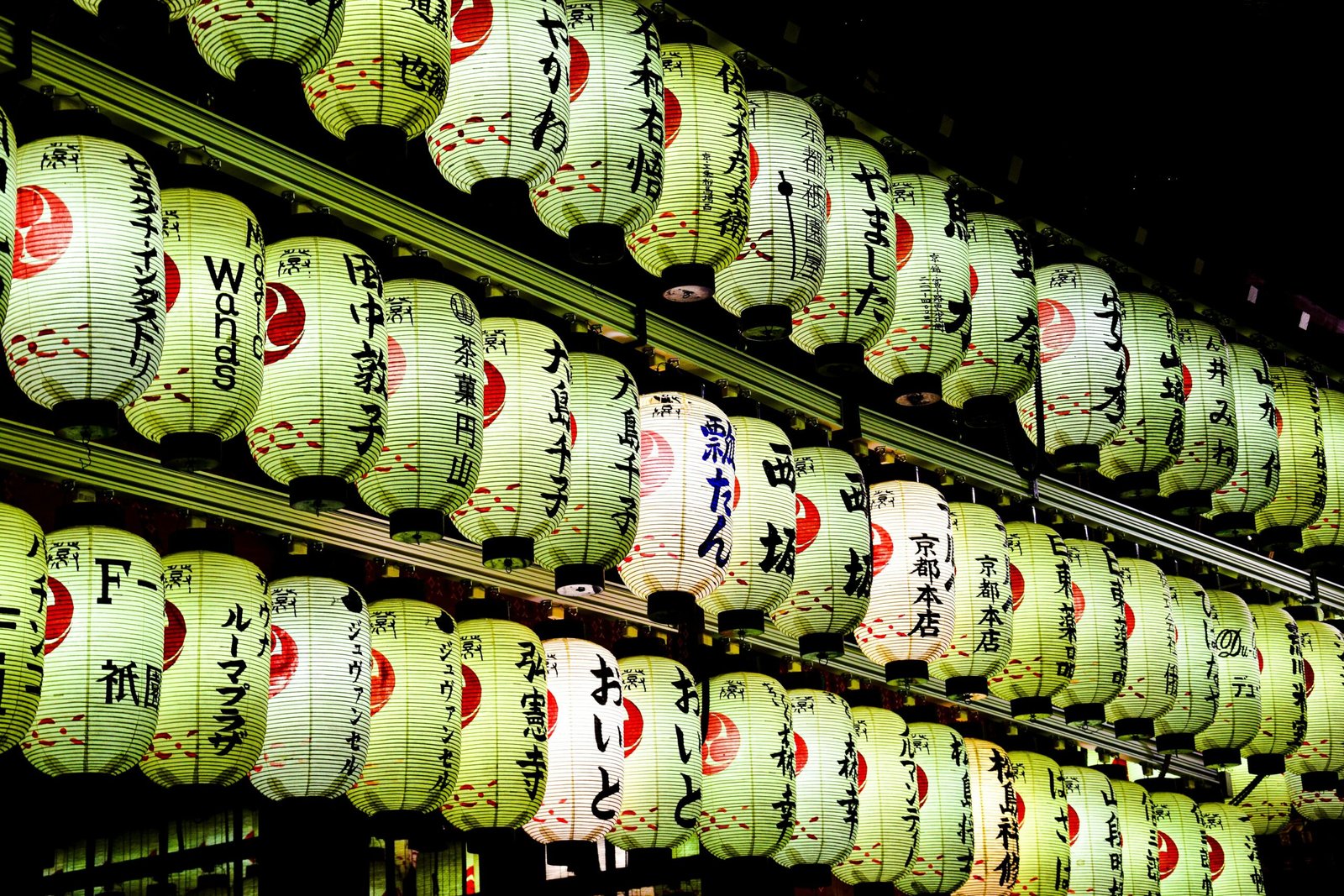
In Edo-period Japan, the “floating world” referred most concretely to the entertainment districts of major cities — the kabuki theaters, teahouses, and pleasure quarters where the usual rules of social obligation bent. These were spaces outside the rhythms of duty and hierarchy, lit by paper lanterns and alive with music, performance, and conversation. To enter was to float, briefly, free of the anchoring weight of everyday life. The floating world was real, physical, sensory — and its beauty was inseparable from its impermanence.
But ukiyo was never merely hedonistic. Embedded in the philosophy — and never quite absent — was the Buddhist shadow from which the concept had evolved. You enjoy the floating world because it will not last. The pleasure is intensified, not diminished, by the knowledge of its ending. The lanterns will be extinguished. The performance will close. The cherry blossoms, which bloom for barely two weeks each spring, will scatter. This interplay of joy and melancholy, of beauty sharpened by transience, is the emotional register that ukiyo occupies.
This sensibility runs through the deepest currents of Japanese aesthetic life. It is present in the tea ceremony’s appreciation of wabi-sabi — beauty found in imperfection and impermanence. It surfaces in the hanami tradition of picnicking under cherry blossoms that will scatter within days. It is the atmosphere evoked by yūgen, the profound, mysterious beauty that arises precisely when one senses the depths beyond the visible. Ukiyo is the world that all these other concepts inhabit — the shared stage on which they play out.
How It’s Used Today
In contemporary Japanese, ukiyo appears less often in everyday conversation but carries deep cultural resonance. Writers and poets invoke it to evoke the melancholy-tinged pleasure of transient experience. The term ukiyo-e remains very much alive as a reference to the woodblock print tradition, and the philosophy of the floating world is widely understood across Japan’s cultural heritage. In casual modern usage, ukiyo can describe a dreamlike or pleasantly detached state — someone drifting through a moment of uncomplicated beauty, briefly untethered from obligation.
「浮世はただ、夢のまた夢。」
— “The floating world is nothing but a dream within a dream.” — adapted from classical Japanese verse
Why English Has No Equivalent
English can approach ukiyo with phrases like “the ephemeral world,” “the beauty of impermanence,” or “living in the moment” — but none of these carry the full weight of the concept. “Carpe diem” tells you to seize the day; ukiyo tells you the day is already floating. “YOLO” strips the philosophy down to recklessness, losing the Buddhist undertow entirely. The closest English might manage is something like “the beauty of the transient” — but that requires four words, a philosophical frame, and still misses ukiyo‘s sensory specificity: the warmth of paper lanterns on water, the single night of a kabuki performance, the cherry snow falling on a crowd that stopped to watch it fall. Ukiyo is not a sentiment. It is a world.
Related Words
If ukiyo resonates with you, you may also love mono no aware (物の哀れ) — the bittersweet awareness of impermanence that is perhaps the closest sibling to ukiyo in Japanese. Where ukiyo is the world, mono no aware is the feeling of watching it pass.
Yūgen (幽玄) names the profound, mysterious beauty that the floating world so reliably evokes — the sense of something vast just beyond what can be seen or said.
Komorebi (木漏れ日) — the interplay of light and shadow through leaves — is one of the most iconic images of the floating world: beauty that exists only in motion, only in a specific moment of atmosphere and light.
Wabi-sabi (侘寂) shares ukiyo‘s embrace of impermanence but finds its beauty in objects rather than worlds — the cracked tea bowl, the weathered stone, the imperfect that was not repaired but honoured.
Further Reading
- Heilbrunn Timeline of Art History: Ukiyo-e — The Metropolitan Museum of Art’s scholarly overview of the floating world art tradition and its historical context.
- Ukiyo-e — Encyclopædia Britannica — A concise authoritative overview of the floating world print tradition and the cultural philosophy behind it.