German
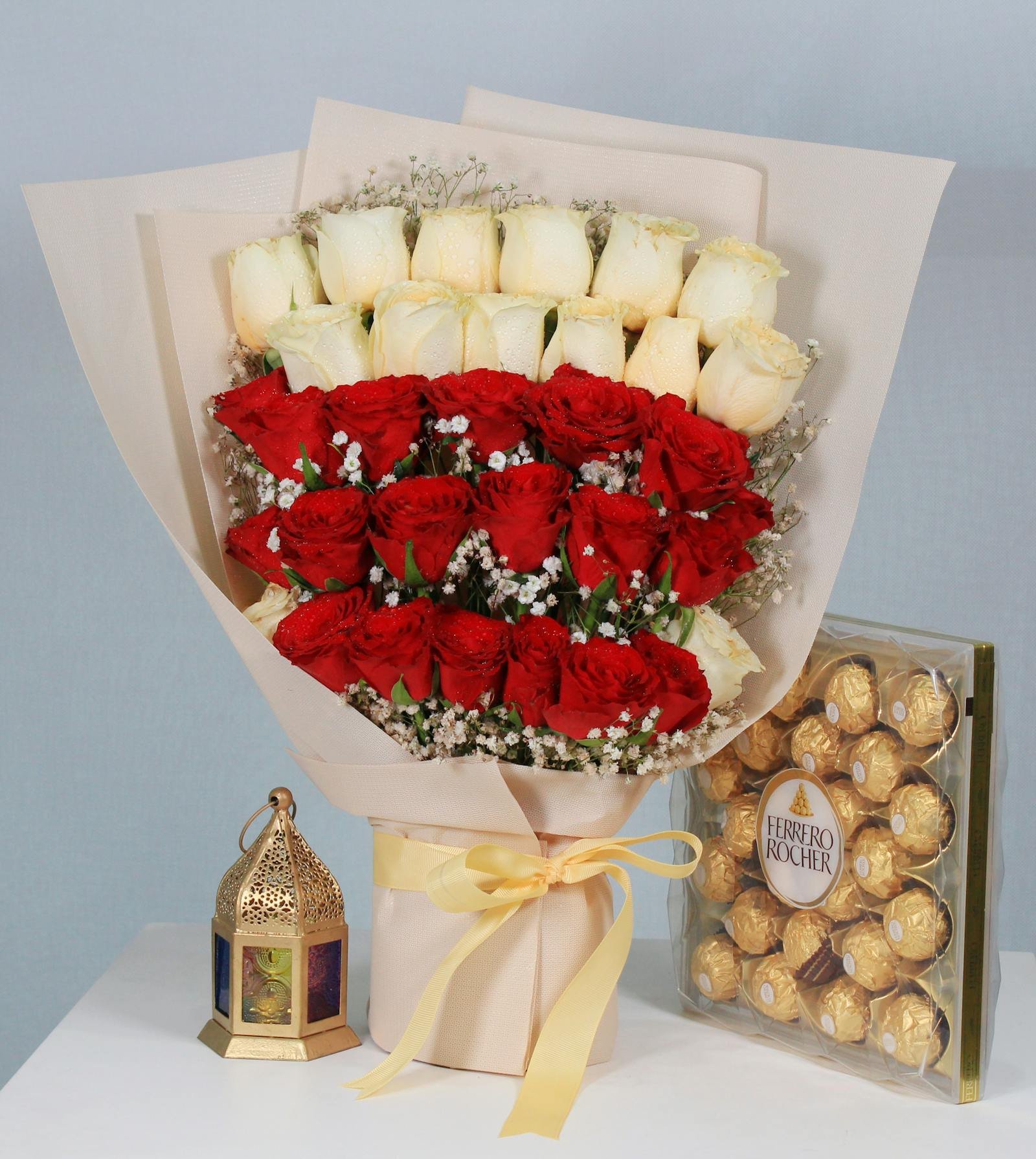
Drachenfutter meaning: the German word for a peace-offering gift — usually flowers, chocolate, or a small luxury — brought home by someone who has stayed out too late or behaved badly. Literally: dragon fodder. Below: the etymology of Drachenfutter, the cultural roots, modern usage, and why English has no equivalent.
/ˈdʁaxn̩ˌfʊtɐ/ — DRAH-khen-foo-ter
Literal translation: “dragon fodder” — from Drachen (the genitive plural of Drache, “dragon”) + Futter (“fodder, animal feed”). The compound names the small offering thrown to the metaphorical dragon at home so it doesn’t breathe fire on the latecomer.
Etymology of Drachenfutter
Drache comes to modern German from Middle High German trache, itself descended from Old High German tracho, a borrowing from Latin draco. The original Latin root, ultimately from Greek drakōn, meant “huge serpent” before it picked up the fire-breathing wings of medieval bestiary illustrations. Across Germanic languages the word kept its association with something large, scaly, and best not provoked — English dragon shares the same trail.
Futter is the older Germanic piece, from Old High German fuotar, the same root that gives English food and fodder. In modern German it is the dedicated word for animal feed — what you put out for cattle, dogs, or chickens, never what you serve at the dinner table. The whimsy of Drachenfutter lives in that distinction: the gift is being framed as the rough food you toss to a beast to keep it from eating you, not as a thoughtful present between equals.
The compound itself is comparatively recent — widely attested in print from the late nineteenth century, when middle-class urban German marriage was settling into its long Sunday-roast equilibrium and the words for its small social rituals were being coined fast. Drachenfutter joins a productive German tradition of self-deprecating compound humor about domestic life, alongside Pantoffelheld (“slipper-hero,” a man ruled by his wife) and Sitzfleisch (“sitting-flesh,” the patience to remain in a chair until a job is done).
Cultural Context
Drachenfutter is a thoroughly nineteenth- and twentieth-century word, born of the bourgeois marriage and the Friday-night beer hall. The classic scene: a man stays out drinking with colleagues, realizes around eleven that his wife is going to be furious, and stops at a flower seller or a chocolatier on the way home. The flowers are not flowers; they are Drachenfutter. Both parties know it. The wife, who has been waiting, accepts the bouquet and says nothing, and the small ceremony of mock outrage and mock contrition is observed.
The word survives partly because the social arrangement it names survives. German workplace culture still includes the Stammtisch (the regulars’ table at the local pub), the after-work beer with colleagues that runs longer than planned, the office Christmas party that ends in a 1 a.m. taxi. Drachenfutter is the small economic transaction that keeps any of these from turning into a real fight. Bakeries near commuter rail stations stock a particular sort of late-evening cake for exactly this purpose. Florists in working-class neighborhoods know that their busiest hours are not Saturday mornings but Friday and Tuesday nights.
The word is also gendered in its history but increasingly used in either direction in modern usage. Younger Germans deploy it cheerfully about their own behavior — the colleague who works late, the friend who flaked on dinner plans, the partner who forgot the anniversary — and the word’s tone has softened from a wink at marital theater to something closer to a self-aware acknowledgment that any close relationship requires the occasional small ceremonial offering. The dragon, in modern Drachenfutter, is just as often the speaker themselves.
How Drachenfutter Is Used Today
Drachenfutter appears in everyday German conversation, advertising for chocolate brands and florists, German-language sitcoms, and the kind of late-night text message a person sends to a friend asking which station has flowers still open. It also turns up in articles about office life, work-life balance, and the rituals of long partnerships. Because the humor is mild and self-aware, the word travels well into English-language pieces about untranslatable German vocabulary, where it usually appears alongside Schadenfreude and Backpfeifengesicht as evidence that German names domestic life with unusual specificity.
Ich habe noch schnell beim Bäcker Drachenfutter geholt — eine Tafel Schokolade. Sicher ist sicher.
— “I quickly stopped at the bakery for some Drachenfutter — a bar of chocolate. Better safe than sorry.”
Why English Has No Equivalent for Drachenfutter
English reaches for “peace offering,” “make-up flowers,” and “I’m-sorry chocolate,” and each of them misses the joke. “Peace offering” is too neutral — it can be made between strangers or nations, and it carries no warmth. “Make-up flowers” describes the object but not the situation. The genius of Drachenfutter is that it names the entire small comedy in one breath: the transgression, the anticipated displeasure, the protective gift, and the mutual understanding that everyone knows what is happening. English needs a sentence; German hands you a noun.
Related Words
- For the secret pleasure at someone else’s misfortune — the moral counterpart of the warm humor in Drachenfutter — see schadenfreude.
- For the related-but-different German word for the embarrassment you feel on someone else’s behalf when they misbehave socially, see fremdschämen.
- For the cozy domestic atmosphere that Drachenfutter often arrives in support of, see Gemütlichkeit.
- For the deep felt-sense of being safe and held in a relationship — the state Drachenfutter helps to repair — see Geborgenheit.
- Browse more from the same vocabulary in our German collection.
Further Reading
- Duden — Drachenfutter (the standard German dictionary’s entry, with usage notes and grammatical detail).
- Etymonline — dragon (the Greek and Latin origins of Drache, tracing the word’s path from “huge serpent” to fire-breathing beast and beyond).