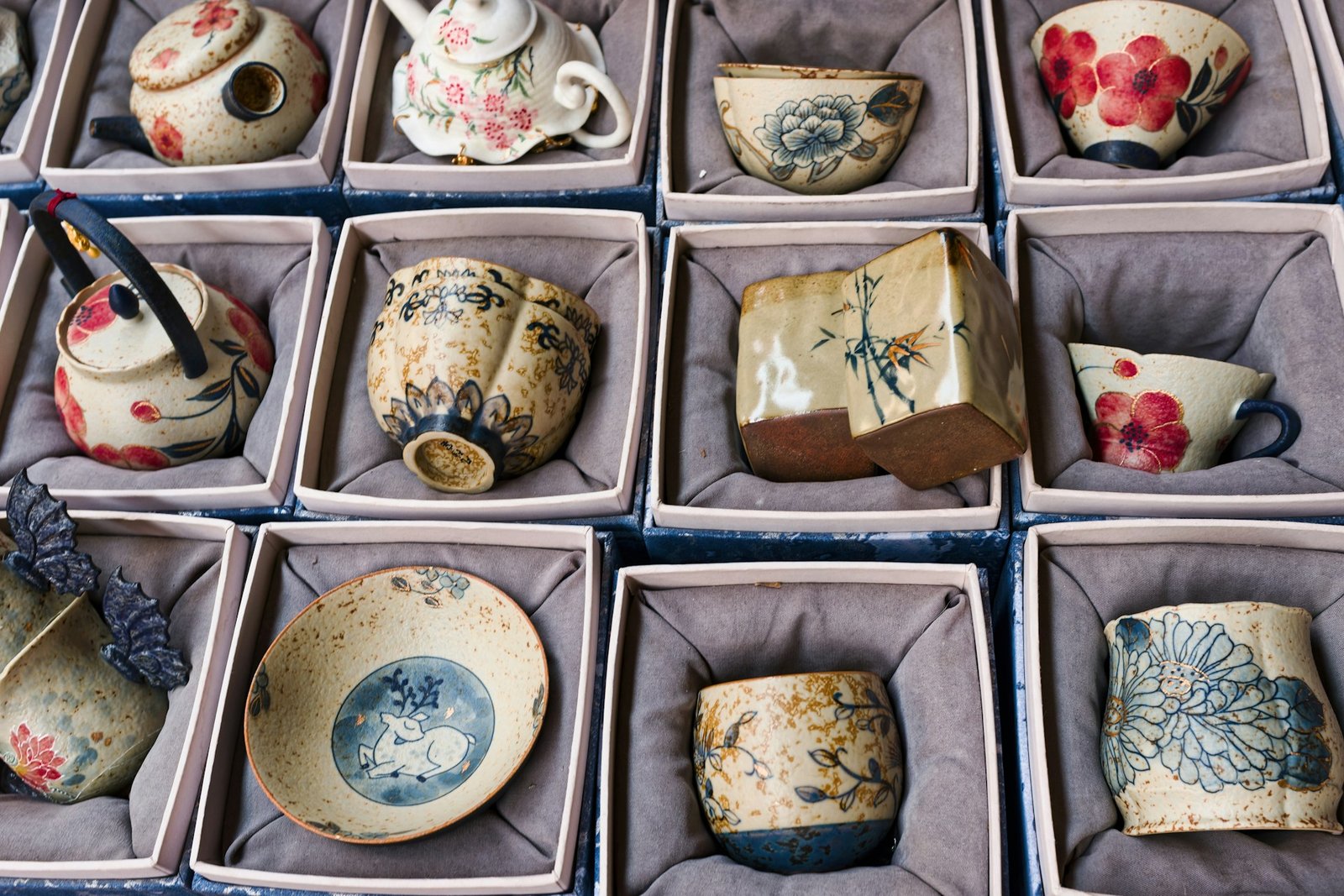
What Does Kodawari Meaning Reveal About Japanese Craft Culture?
The kodawari meaning goes to the heart of Japan’s most admired cultural trait: the refusal to compromise. Understanding kodawari meaning helps explain why Japanese ramen chefs spend decades perfecting a single broth, why a knife-maker rejects a blade only they can tell is flawed, and why the word “good enough” feels incomplete in the language of Japanese craftsmanship.
Japanese (拘り) · Craft & Excellence
Pronunciation: /ko.da.wa.ɾi/
Literal translation: “That which one insists upon” — from kodawaru (拘わる), to adhere to a personal standard
Etymology of Kodawari
Kodawari (拘り) derives from the Japanese verb kodawaru (拘わる), and its linguistic history is a study in semantic reversal. In classical Japanese, kodawaru carried unmistakably negative connotations: to be obsessively fixated on something trivial, to be unnecessarily rigid, to let a minor detail hold you back from the larger work. The ko- prefix suggested smallness and intimacy, while dawaru—related to sawaru (障る), to hinder or interfere—painted a portrait of someone trapped by their own fussiness. To kodawaru was to be captive to particulars.
The word is written with the kanji 拘 (ko/kō), meaning “to detain” or “to adhere to,” which also appears in 拘束 (kōsoku, constraint) and 拘留 (kōryū, detention). These related words illuminate the kanji’s core meaning: to be held by something, bound to it. Another reading of the same character, kakawa(ru), means “to be involved with” or “to concern oneself with”—suggesting that the word has always described an intense, personal relationship with something specific, for better or worse.
The semantic rehabilitation of kodawari occurred gradually through the twentieth century, driven largely by the growing cultural prestige of Japanese craftsmanship. As shokunin (職人)—Japan’s master artisans—became cultural heroes rather than mere tradespeople, their obsessive attention to detail became something to celebrate rather than pathologize. Kodawari shed its negative valence and emerged instead as a mark of professional distinction, a signal that the person behind a product cares beyond the point at which caring is economically rational. By the late twentieth century, the word had completed its transformation from a description of dysfunction to a badge of honor.
Cultural Context
Japan’s craft culture—the culture of shokunin, kaizen, and monozukuri (the art of making things)—is the soil in which kodawari grows. A ramen chef with kodawari may spend two decades perfecting a single broth, adjusting the mineral content of the water, the temperature of the fire, the precise moment at which the tare is added. A Japanese knife maker with kodawari will reject a blade whose steel does not meet their personal standard, even if the deviation is invisible to any customer’s eye. These particulars are not visible on the finished product. They are visible only to the maker—and to the quality of the result. Kodawari operates in the private space between “good enough” and “as good as it can possibly be.”
This internal standard is not perfectionism in the anxiety-producing Western sense. It is closer to integrity—a settled, confident relationship with one’s own values that produces mastery as a natural byproduct rather than as a desperate attempt to avoid failure. The craftsperson with kodawari is not driven by fear of criticism but by a personal compass that simply will not accept less than a certain standard. This is why the word conveys admiration rather than neurosis. It names not a psychological trait but an ethical commitment: the specific, non-negotiable set of standards that defines a craftsperson’s identity and the boundary they will not cross.
In contemporary Japan, kodawari has traveled far beyond the workshop. Craft beer breweries describe their process as kodawari, printing the word beside sourcing notes on the label. Restaurants invoke it to explain why their ingredients come from a particular prefecture. Consumer electronics brands use it to justify premium pricing. While some traditionalists lament this commercialization, the widespread adoption of the term reflects something genuine: people respond to the assurance that someone cared obsessively about what they made, beyond the point at which caring makes economic sense. The word has become a quality signal—and it works precisely because it names something that most cultures feel but cannot quite say.
How Kodawari Is Used Today
Kodawari is rarely announced; it is demonstrated. When it is spoken aloud, it often comes with a note of quiet explanation—or mild apology for the inconvenience that exacting personal standards can impose on others. A craftsperson does not boast of their kodawari; they simply will not ship a piece they feel is beneath their standard, and that decision speaks for itself.
“Watashi no kodawari wa, zehi gozaimasu.”
“When it comes to my craft, I do indeed have my particular standards.”
Why English Has No Equivalent
“Perfectionism” is the nearest English approximation, but it describes a psychological trait—often a pathological one—rather than a craftsperson’s settled relationship with quality. The perfectionist is portrayed as someone paralyzed by impossible standards; the person with kodawari is productive, decisive, and clear about exactly what matters to them. “Craftsmanship” names the output, not the internal orientation that produces it. “Attention to detail” describes a behavior, not a value system. Kodawari names the specific, personal, non-negotiable standard itself—the point of principle at which a person decides what they will not compromise, regardless of cost, customer pressure, or deadline. English has the concept somewhere between perfectionism, integrity, and craftsmanship. It simply has no single word.
Related Words You Might Love
If kodawari speaks to you, explore these related ideas from Japanese and global craft culture:
- Shokunin — the Japanese master craftsperson devoted to lifelong mastery through endless repetition
- Kaizen — the philosophy of continuous, incremental improvement applied to every aspect of work and life
- Wabi-sabi — the Japanese aesthetic of finding beauty in imperfection, impermanence, and incompleteness
- Ma — the Japanese art of the meaningful pause, the intentional use of empty space
- Shibui — subtle, restrained Japanese aesthetic beauty that reveals more with each viewing
Further Reading
For deeper exploration of kodawari and Japanese craft philosophy:
- Etymonline: Japanese loanwords and craft vocabulary — traces the linguistic pathways of Japanese terms entering global usage
- JSTOR: Monozukuri and the Philosophy of Japanese Craftsmanship — peer-reviewed examination of the cultural values behind Japanese making traditions