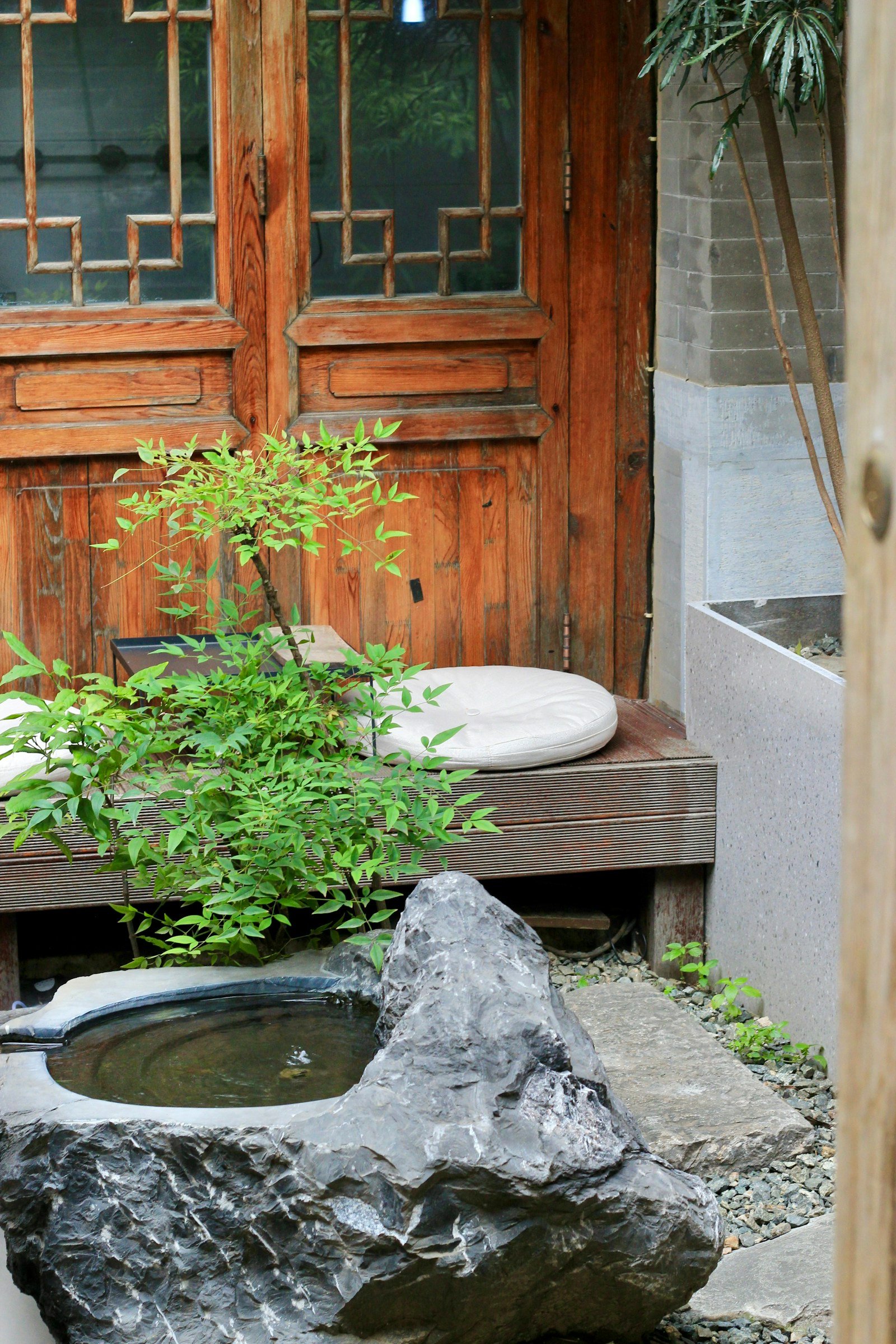
Japanese | 和み (Nagomi)
Pronounced: /na.ɡo.mi/
Literal translation: From the verb nagomu (和む) — “to soften,” “to mellow,” or “to settle into calm.” Nagomi names the pleasant state that results from this softening.
Etymology
Nagomi flows from the verb nagomu (和む), which belongs to one of the most semantically rich families in the Japanese language. The kanji at its heart — 和 — is one of Japan’s most significant characters: it means harmony, peace, gentleness, and has historically referred to Japan itself (the ancient reading Yamato, written 大和, contains the same character). This character appears in the Japanese national ideal of wa (和), social harmony, which Prince Shōtoku declared the highest virtue in Japan’s first constitution in 604 CE: “Harmony is to be valued, and an avoidance of wanton opposition to be honored.”
The verb nagomu (和む) describes a gentle process — the softening of something sharp, the warming of something cool, the settling of something agitated into a state of peaceful equilibrium. Related forms include nagoyaka (和やか), meaning “mild,” “gentle,” or “harmonious in atmosphere,” and nagonago (和和), an emphatic reduplication meaning “very gentle and calm.” The noun nagomi names the resulting state: not the action of settling, but the condition of having settled — the quiet presence of harmony.
What makes nagomi linguistically distinctive is its emotional specificity. It is not merely the absence of conflict — heiwa (平和, peace) covers that — nor simply contentment — manzoku (満足) handles satisfaction. Nagomi describes the particular quality of warmth that arises when all elements of a situation — people, flavors, sounds, relationships — are in quiet, unstrained accord with one another.
Cultural Context
To understand nagomi is to understand how deeply the concept of wa (harmony) is woven into Japanese life. In a society that has long prioritized collective cohesion over individual assertion, nagomi represents the felt texture of successful harmony — not the rule, but the experience that confirms the rule is working. A room full of people who have reached genuine understanding does not just avoid conflict; it achieves nagomi. The difference is the difference between a ceasefire and peace.
Nagomi is especially central to Japanese food culture. A chef who achieves nagomi in a dish has found the precise balance where no single flavor overwhelms another — where sweetness, saltiness, umami, acidity, and bitterness exist in quiet conversation rather than competition. The word appears in restaurant reviews, cooking philosophy, and the aesthetic tradition of washoku (和食, Japanese cuisine) — which notably contains the same character 和. This is not a coincidence: Japanese food at its highest level is understood as an edible embodiment of harmony. A bowl of well-made dashi broth, with its subtle interplay of kombu and bonito, is a culinary expression of nagomi.
Beyond food, nagomi describes an atmosphere — what English speakers might approximate as “good vibes,” but more precisely and less ephemerally. A family gathering where old tensions have genuinely eased, an evening with close friends where no one feels the need to perform, a moment alone in a garden where the sounds of the city have faded: these are nagomi experiences. The word is also used to describe certain relationships — a person whose presence consistently brings nagomi to those around them is deeply valued in Japanese social life, representing the highest expression of omoiyari (thoughtful consideration for others).
How It’s Used Today
In contemporary Japan, nagomi appears across everyday contexts — from food writing to interior design to personal relationships. A Japanese home designed with nagomi in mind would avoid visual clutter, harsh contrasts, and aggressive ornamentation, opting instead for natural materials, muted tones, and spaces that allow the eye to rest. The concept has also entered the language of workplace culture, where a nagomi-rich environment is one where colleagues interact without social strain or performative competition.
あなたといると和む。
— “Being with you brings nagomi.” (A common expression of deep comfort in someone’s presence.)
Why English Has No Equivalent
English’s closest approximations — “calm,” “harmony,” “peace,” “serenity,” “tranquility” — all fall short in specific ways. “Calm” is a neutral state and can be cold; nagomi is warm. “Harmony” is architectural and abstract; nagomi is felt and present. “Peace” often implies the absence of conflict rather than the positive presence of gentle accord. “Serenity” gestures toward something closer, but lacks nagomi’s interpersonal and sensory dimensions — you experience serenity alone, whereas nagomi is often found in the quality of connection between people, or between a person and their food, their space, their surroundings. Nagomi is what happens when disparate things stop pulling against each other and begin, quietly, to belong together.
Related Words
If nagomi resonates with you, explore Ma — the Japanese concept of meaningful negative space and pause, which creates the room nagomi needs to exist. Wabi-sabi, the Japanese aesthetic of imperfect, transient beauty, shares nagomi’s quiet warmth and resistance to excess. And Mono no aware — the bittersweet awareness of impermanence — is a feeling that often settles, in its later notes, into something very close to nagomi: the peaceful acceptance of things as they are, for exactly as long as they are.
Further Reading
- Harmony — Online Etymology Dictionary — traces the Greek and Latin roots of “harmony” and its travel into Western languages, illuminating what nagomi adds that the Western concept leaves out
- Japanese Aesthetics — Stanford Encyclopedia of Philosophy — examines the philosophical framework behind wa, mono no aware, wabi-sabi, and related concepts, providing the intellectual context in which nagomi lives