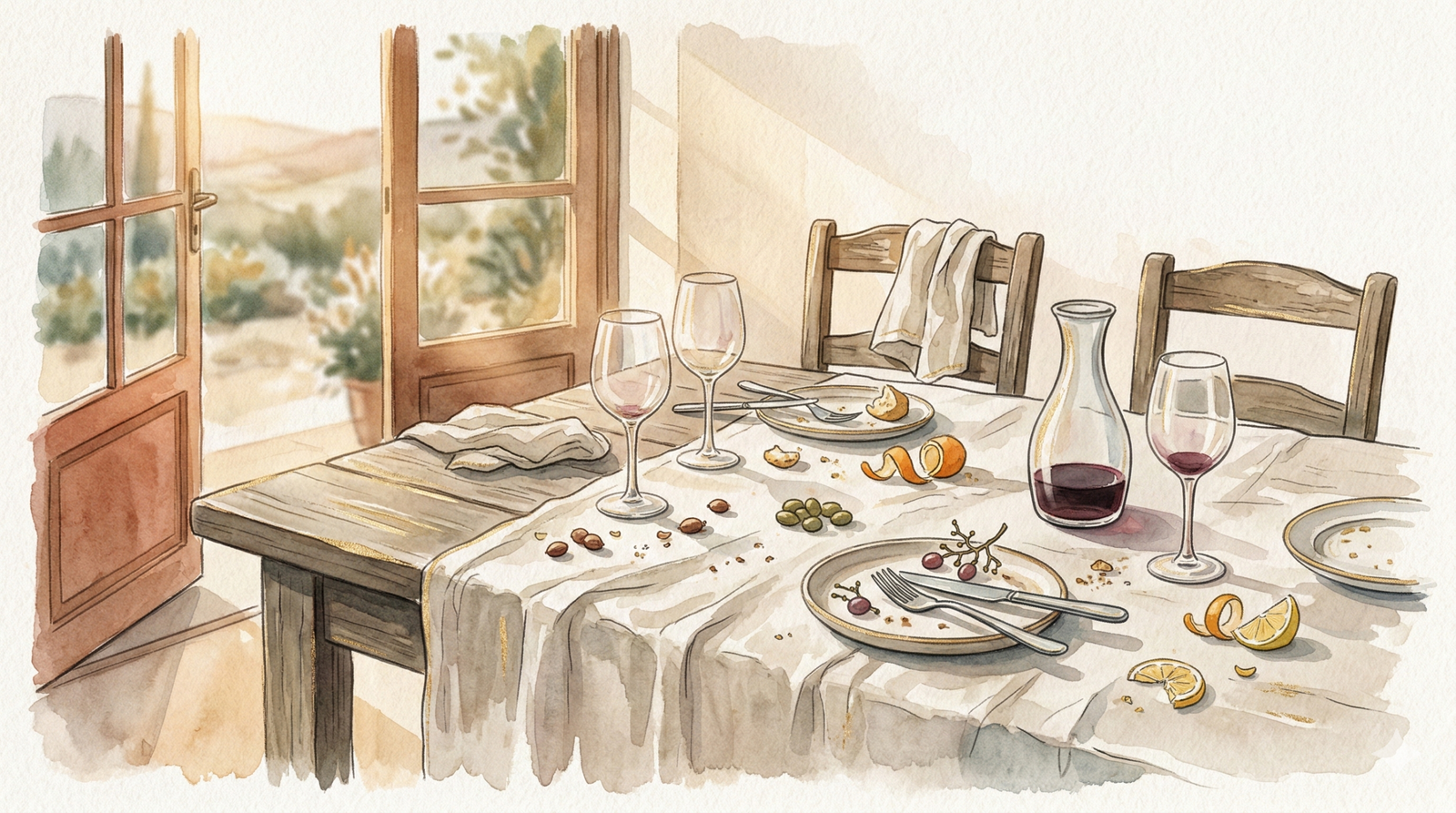
The sobremesa meaning captures one of the most beloved traditions in Spanish-speaking culture — the time spent lingering at the table after a meal, talking, laughing, and enjoying each other’s company. The sobremesa meaning goes far beyond simply staying seated after eating; it describes a sacred social ritual where the best conversations happen, relationships deepen, and time seems to slow down. In a world obsessed with efficiency, the sobremesa meaning reminds us that some of life’s most meaningful moments happen when we stop rushing and simply be with the people we love.
What Does Sobremesa Mean? 3 Rituals of Spanish Table Culture
The sobremesa meaning is beautifully transparent in its etymology. The word combines sobre (over, above, on top of) and mesa (table), literally meaning “over the table” or “on top of the table.” This construction reveals that the sobremesa meaning is not about the food itself but about what happens above the table after the plates are cleared — the conversation, the connection, the shared humanity. In Spanish, the word functions both as a noun (the period of time itself) and as a cultural concept. The sobremesa meaning first appears in written records from medieval Spain, though the practice it describes is certainly far older, rooted in Mediterranean traditions of communal dining that date back millennia.
In Spain and across Latin America, sobremesa is not optional — it is an essential part of the meal that can last anywhere from thirty minutes to several hours. Spanish lunch culture, with its two-hour midday break, is specifically designed to accommodate the sobremesa meaning. Families gather, coffee and digestifs appear, and the real conversation begins — politics, philosophy, family news, and the gentle art of storytelling. The practice is so deeply embedded in Spanish culture that leaving the table immediately after eating is considered rude. Restaurants understand the sobremesa meaning and would never present the check until asked. This tradition reflects a fundamentally different relationship with time — one that prioritizes human connection over productivity and treats every shared meal as an opportunity for genuine communion.
Sobremesa connects beautifully to other untranslatable words about warmth and togetherness. The Dutch gezellig captures a similar atmosphere of cozy social connection, while the Danish hygge creates intimate spaces for belonging. The Swedish fika ritualizes the coffee break as a social institution, and the Japanese concept of ikigai finds purpose in these moments of daily connection. For more on Spanish dining culture, see Wikipedia’s overview of sobremesa.
The sobremesa meaning offers a powerful counterpoint to the modern habit of eating quickly and moving on. Research consistently shows that shared meals and unhurried conversation improve mental health, strengthen relationships, and even aid digestion. The sobremesa meaning teaches us that a meal is not just fuel — it is an act of love, a ritual of connection, and an investment in the relationships that give life its richest meaning. For anyone seeking to slow down and reconnect with what matters most, the sobremesa meaning provides both the word and the wisdom to do so.
Spanish
soh-breh-MEH-sah
“The time spent lingering at the table after a meal, talking and enjoying each other’s company”
Literal Translation
“Over the table” — from sobre (over/on) + mesa (table)
Cultural Context
In Spain and across Latin America, sobremesa is not just a moment — it’s an institution. Lunch in Spain often begins at 2 PM and can stretch well into the evening, with the sobremesa lasting longer than the meal itself. It’s considered rude to rush away from the table. This practice reflects the Mediterranean and Latin American prioritization of relationships over schedules. Sobremesa is where the real conversations happen — where families share stories, friends debate ideas, and business deals are truly sealed. In an era of quick lunches eaten at desks, sobremesa stands as a radical act of human connection.
When Would You Use It?
After a long Sunday lunch with family, when the plates have been cleared but everyone remains at the table — sharing stories, sipping coffee, letting the afternoon unfold naturally — that’s sobremesa. It’s the understanding that the meal was just the excuse; the real purpose was togetherness.
Related Words
Hygge (Danish), Gezellig (Dutch), Fika (Swedish)
Want to Learn Spanish?
Discover more beautiful Spanish words and phrases. Start your language journey today.
📬 Get a Beautiful Untranslatable Word in Your Inbox Every Week
Join fellow word lovers and discover words that English forgot.