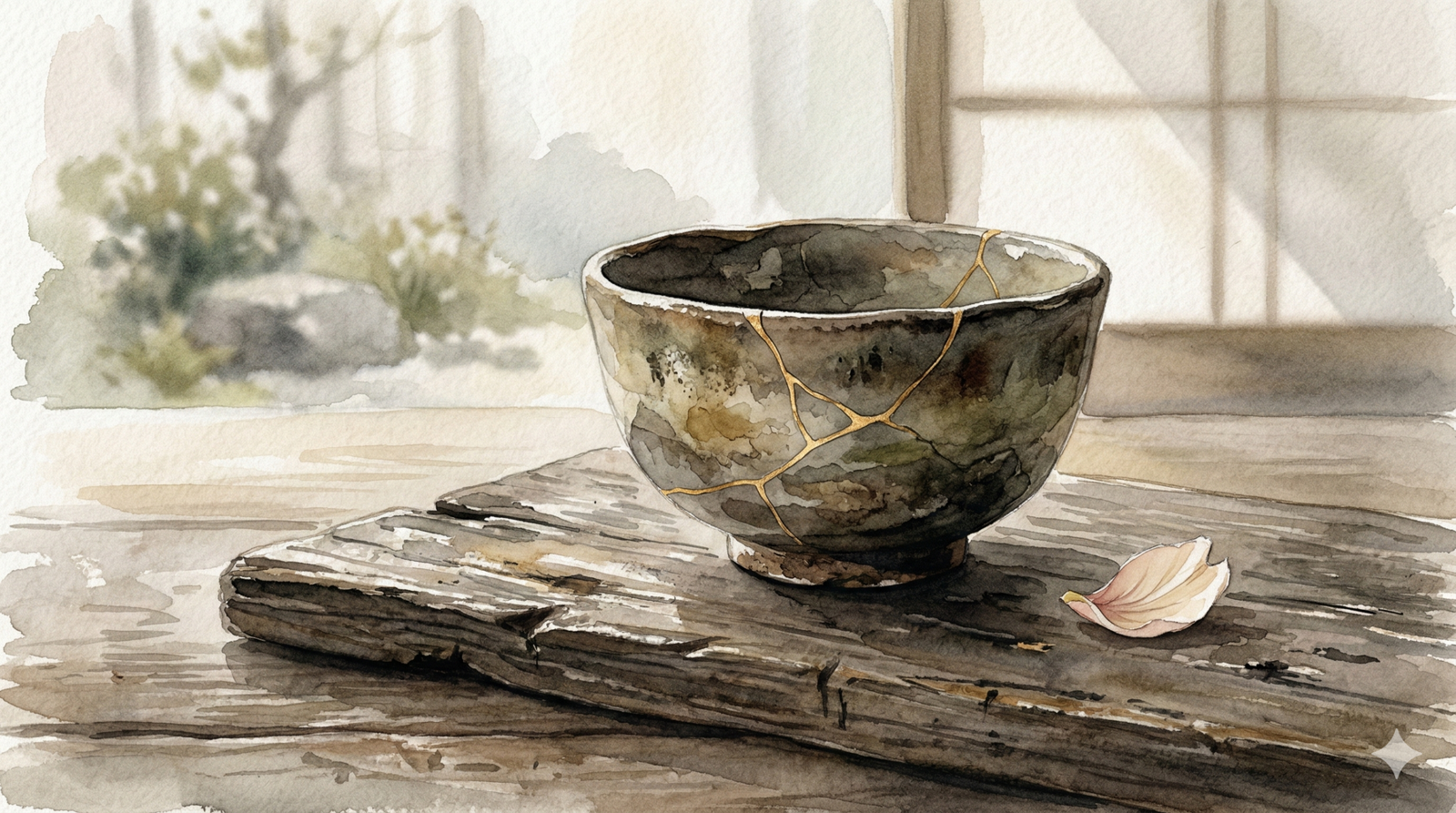
The wabi-sabi meaning represents one of Japan’s most profound aesthetic philosophies — the art of finding beauty in imperfection, impermanence, and incompleteness. Rooted in Zen Buddhist teachings, wabi-sabi meaning invites us to embrace the natural cycle of growth and decay, to see the crack in a teacup not as a flaw but as a story. This untranslatable Japanese concept has influenced art, architecture, design, and daily life for centuries.
What Does Wabi-Sabi Mean? Understanding 7 Dimensions of Japanese Beauty
To fully grasp the wabi-sabi meaning, we must trace its two component words. Wabi originally conveyed loneliness and living in nature away from society, but over time evolved to suggest rustic simplicity and understated elegance. Sabi meant “cold” or “withered,” eventually coming to signify the beauty that emerges with age and wear. Together, wabi-sabi meaning describes an intuitive appreciation of the transient nature of all things — the fading autumn leaf, the weathered stone garden, the handmade pottery with its natural irregularities.
In Japanese culture, the wabi-sabi meaning is deeply connected to the tea ceremony, where simplicity and natural imperfection are celebrated rather than concealed. Sen no Rikyu, the legendary tea master of the 16th century, elevated wabi-sabi into a complete aesthetic system by choosing rough, unglazed tea bowls over the ornate Chinese porcelain that was fashionable at the time. This revolutionary choice declared that true beauty lies not in perfection but in authenticity. Today, understanding wabi-sabi meaning offers a powerful antidote to our culture of mass production and disposability.
Wabi-sabi shares philosophical connections with other Japanese untranslatable words in our collection. The concept of komorebi — sunlight filtering through leaves — captures a similarly fleeting natural beauty, while yugen describes the profound mystery that wabi-sabi touches upon. Ikigai, the Japanese concept of finding one’s purpose, complements wabi-sabi by suggesting that meaning comes not from perfection but from authentic engagement with life. For a Nordic perspective on embracing simplicity, explore lagom, the Swedish art of “just enough.” Learn more about the philosophical roots of wabi-sabi in Japanese aesthetics.
Whether you encounter wabi-sabi meaning through the cracked glaze of a raku tea bowl, the moss growing on an ancient temple wall, or the patina of a well-loved wooden table, this Japanese philosophy reminds us that impermanence is not something to fear but to cherish. The wabi-sabi meaning teaches that every scratch, every fading color, every asymmetric line tells a story of time passing and life being lived. In a world obsessed with the new and the flawless, wabi-sabi meaning offers a gentler, more honest way of seeing beauty all around us.
Japanese (侘寂) · Philosophy & Mindfulness
Pronunciation: WAH-bee SAH-bee
“The beauty found in imperfection and the acceptance of transience.”
What Does Wabi-Sabi Mean?
Wabi-sabi is a Japanese aesthetic and philosophical concept that finds beauty in imperfection, impermanence, and incompleteness. It is derived from two words: wabi, which refers to rustic simplicity and understated elegance, and sabi, which relates to the beauty that comes with age and wear.
Together, wabi-sabi represents one of the most profound ideas in Japanese culture — that nothing lasts, nothing is finished, and nothing is perfect. Rather than viewing these truths with despair, wabi-sabi invites us to find deep beauty within them.
The Philosophy Behind Wabi-Sabi
Rooted in Zen Buddhism, wabi-sabi emerged as a reaction against the elaborate perfection valued in Chinese aesthetics. Tea master Sen no Rikyu championed this philosophy in the 16th century, transforming the tea ceremony from an ostentatious display of wealth into an intimate celebration of simplicity.
At its core, wabi-sabi teaches us to see beauty in a cracked bowl that has been lovingly repaired, in the weathered patina of an old wooden table, in the asymmetry of a handmade ceramic. It is the moss growing on ancient stones, the fading petals of cherry blossoms, the quiet dignity of aging.
Wabi-Sabi in Daily Life
In practice, wabi-sabi can transform how we see the world around us. It asks us to slow down and notice the small, imperfect details that give life its texture and richness. A hand-knit sweater with an uneven stitch. A well-loved book with dog-eared pages. The laugh lines on a face that has known both joy and sorrow.
In an age obsessed with perfection — filtered photos, flawless surfaces, relentless optimization — wabi-sabi offers a radical alternative. It whispers that enough is enough, that beauty lives in the real and the worn, and that our imperfections are what make us genuinely beautiful.
The Art of Kintsugi
Perhaps the most vivid expression of wabi-sabi is kintsugi (金継ぎ), the Japanese art of repairing broken pottery with gold lacquer. Rather than hiding the damage, kintsugi highlights it — transforming breaks into luminous seams of gold. The repaired object becomes more beautiful for having been broken, its history of fracture celebrated rather than concealed.