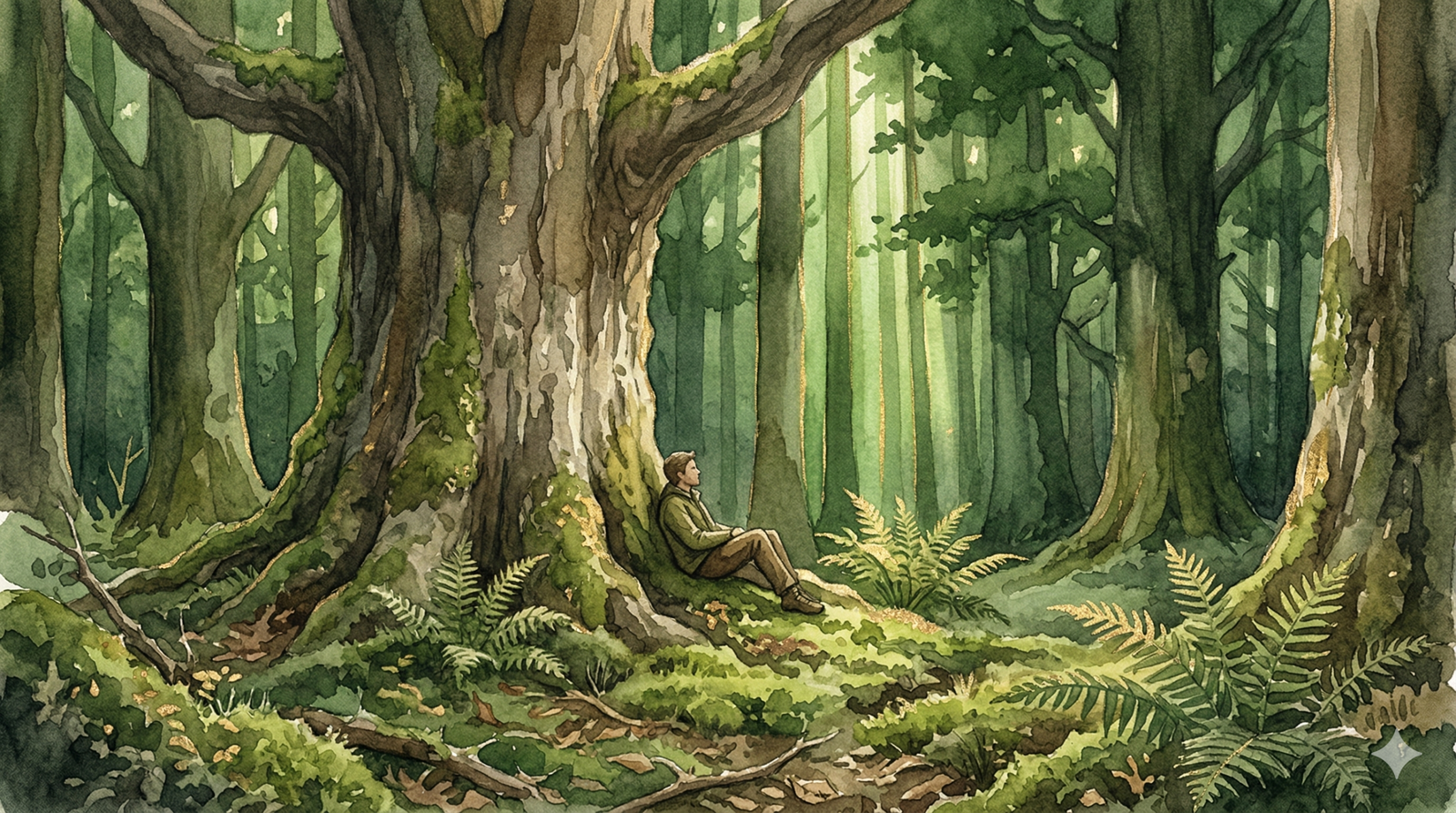
The waldeinsamkeit meaning captures a quintessentially German experience — the feeling of being alone in the woods, a deep, almost spiritual connection with the forest that brings both solitude and profound peace. The waldeinsamkeit meaning is not about loneliness but about a restorative communion with nature, the sense of being held by ancient trees and dappled light. Ralph Waldo Emerson was so captivated by this concept that he borrowed the word directly into English, recognizing that no equivalent existed in his own language.
What Does Waldeinsamkeit Mean? 4 Layers of German Forest Solitude
The waldeinsamkeit meaning is a beautiful example of German’s capacity for compound words that capture complex experiences. The word breaks into three components: Wald (forest), einsam (alone, solitary), and -keit (a suffix creating abstract nouns, similar to English “-ness”). Together, the waldeinsamkeit meaning literally translates to “forest-alone-ness” or “the state of being alone in the forest.” The word was popularized by the Romantic poet Ludwig Tieck in his 1797 work, where waldeinsamkeit appears as both a concept and a character — the forest itself becoming a companion in solitude. This literary origin reveals that the waldeinsamkeit meaning was always about more than physical isolation; it is about the transformation that occurs when human consciousness meets the ancient stillness of the woods.
Germany’s deep cultural relationship with forests stretches back millennia, from the sacred groves of Germanic tribes to the Black Forest fairy tales collected by the Brothers Grimm. The waldeinsamkeit meaning reflects this heritage — forests are not merely landscapes in German culture but living entities with spiritual significance. Today, this tradition continues through Germany’s extensive network of forest paths, the cultural practice of Sunday woodland walks, and the growing scientific validation of Shinrin-yoku (forest bathing), which confirms what the waldeinsamkeit meaning has always suggested: time spent alone among trees reduces stress, lowers blood pressure, and restores mental clarity. Germany protects over 11 million hectares of forest, and the right to walk freely through woodland is enshrined in law — a testament to how central the waldeinsamkeit meaning remains to German identity.
Waldeinsamkeit shares thematic territory with other untranslatable words about nature and solitude. The Japanese komorebi captures the specific beauty of sunlight filtering through forest leaves, while the Norwegian concept of friluftsliv celebrates the open-air life. The German fernweh channels longing toward wild landscapes, and the Japanese yūgen evokes the profound mystery of the natural world. For deeper exploration, see Wikipedia’s overview of waldeinsamkeit.
The waldeinsamkeit meaning resonates powerfully in our hyperconnected age, where true solitude has become rare and precious. As urbanization accelerates and screen time dominates daily life, the waldeinsamkeit meaning offers both a diagnosis and a prescription — the recognition that we need regular communion with the natural world to remain whole. The waldeinsamkeit meaning invites us to step away from the noise, enter the cathedral of trees, and rediscover the deep peace that comes from being beautifully, intentionally alone in the presence of something far older and wiser than ourselves.
German
VALD-ayn-zahm-kyte
“The feeling of being alone in the woods — a deep, almost spiritual connection with the forest”
Literal Translation
“Forest solitude” — from Wald (forest) + Einsamkeit (loneliness/solitude)
Cultural Context
Germany has one of the deepest cultural relationships with forests of any nation. The German forest — der Wald — appears throughout German literature, music, philosophy, and fairy tales. From the Brothers Grimm to the Romantic poets, the forest represents both danger and sanctuary, wildness and peace. Waldeinsamkeit captures a specifically German form of nature appreciation: the idea that being alone among trees is not lonely but liberating. The word was popularized by the American transcendentalist Ralph Waldo Emerson, who encountered the concept and declared it untranslatable. Today, as forest bathing (shinrin-yoku) gains global popularity, waldeinsamkeit feels more relevant than ever.
When Would You Use It?
Imagine walking alone through a dense pine forest, sunlight barely filtering through the canopy above. The only sounds are birdsong and the crunch of leaves beneath your feet. Your phone has no signal. Your mind slowly quiets. That peaceful, solitary communion with nature — that’s waldeinsamkeit.
Related Words
Shinrin-yoku (Japanese), Komorebi (Japanese), Friluftsliv (Norwegian)
Want to Learn German?
Discover more beautiful German words and phrases. Start your language journey today.
📬 Get a Beautiful Untranslatable Word in Your Inbox Every Week
Join fellow word lovers and discover words that English forgot.