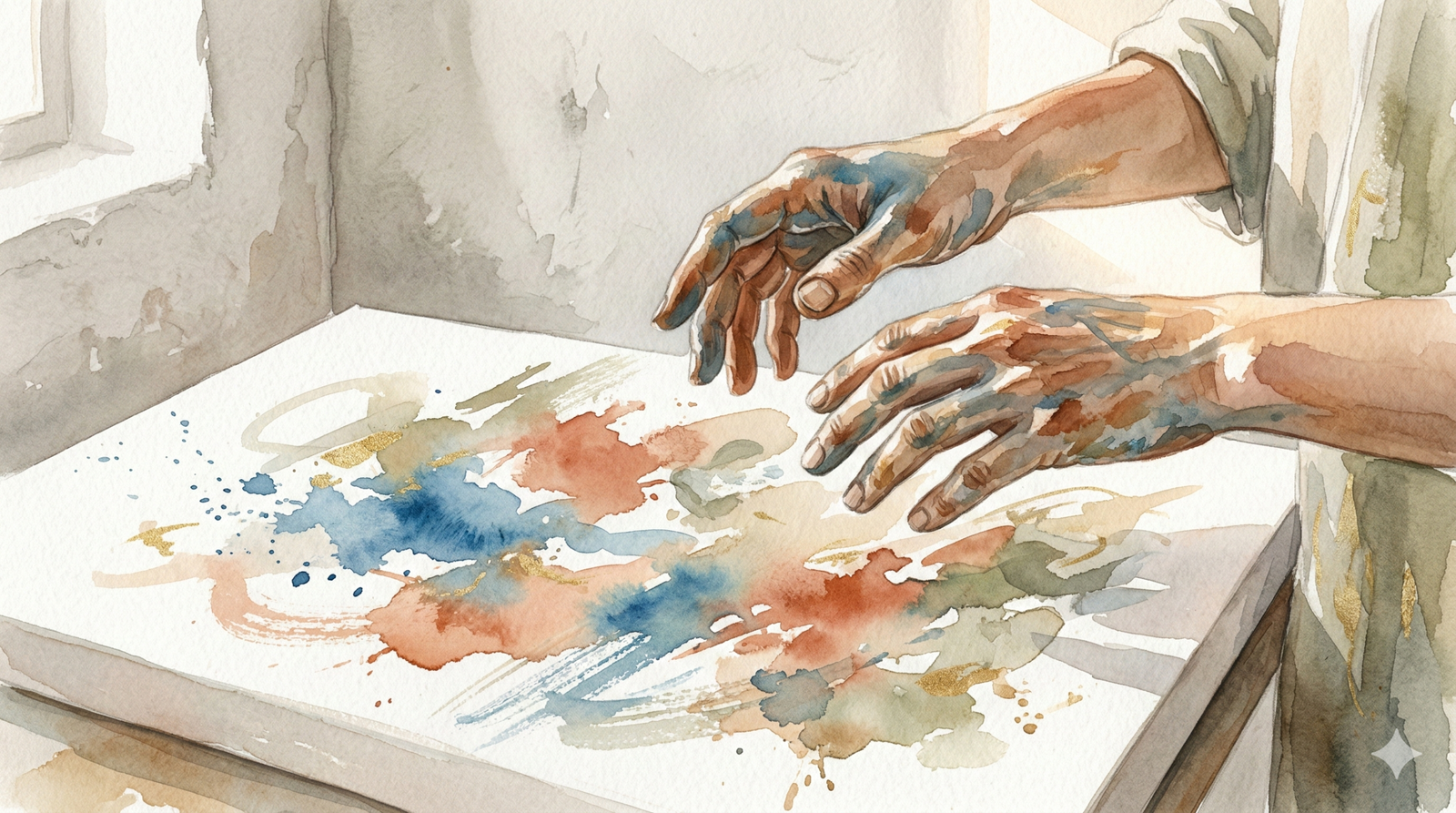
The meraki meaning embodies one of the most inspiring concepts in the Greek language — to do something with soul, creativity, and love, pouring yourself completely into your work. The meraki meaning goes beyond mere dedication or craftsmanship; it describes the act of leaving a piece of your soul in everything you create. When a Greek grandmother cooks a family recipe with meraki, or an artist paints with meraki, they are investing something irreplaceable — their very essence — into the creation.
What Does Meraki Mean? 3 Elements of Greek Creative Spirit
The meraki meaning has fascinating etymological origins that span cultures. The word entered Modern Greek from the Turkish merak, which itself derives from the Arabic maraq, meaning “to labor” or “to apply oneself with ardor.” In Turkish, merak carries connotations of passionate curiosity and devoted interest. When Greek adopted the word, the meraki meaning evolved to emphasize the creative and soulful dimension — transforming from simple labor into something sacred. This cross-cultural linguistic journey mirrors the concept itself: meraki is about transformation, about taking raw effort and infusing it with something transcendent that makes the work uniquely yours.
In Greek culture, meraki is not reserved for grand artistic endeavors — it permeates everyday life. A fisherman who mends his nets with meraki, a shopkeeper who arranges her display with meraki, a teacher who prepares lessons with meraki — all are practicing this philosophy of soulful engagement. The concept is deeply connected to the Greek value of philotimo (love of honor), where personal pride in one’s work reflects respect for both oneself and others. Greek food culture perhaps best exemplifies the meraki meaning: the difference between a meal prepared with meraki and one without is immediately apparent in every bite. The concept has gained international attention as people worldwide seek more meaningful engagement with their work and creative pursuits.
Meraki connects to other untranslatable words about purpose and passionate living. The Japanese concept of ikigai describes finding one’s reason for being, while wabi-sabi celebrates the beauty in imperfection that often emerges from soulful creation. The Finnish sisu captures the inner determination that sustains creative effort, and ubuntu reminds us that our deepest work serves the community. For more on Greek linguistic concepts, see Wikipedia’s overview of meraki.
The meraki meaning offers a powerful antidote to the modern tendency toward efficiency over soul. In a world that increasingly values speed and output, the meraki meaning reminds us that the most memorable human creations — from handwritten letters to home-cooked meals to carefully tended gardens — carry the unmistakable fingerprint of someone who cared deeply. Understanding the meraki meaning can transform how we approach our own work and creative endeavors, inviting us to slow down and invest our authentic selves in everything we do.
Greek
meh-RAH-kee
“To do something with soul, creativity, and love — to pour yourself completely into your work”
Literal Translation
Derived from the Turkish word “merak,” meaning labor of love or to do something with pleasure
Cultural Context
In Greek culture, meraki represents the highest form of dedication to one’s craft. Whether cooking a meal, painting a wall, or writing a poem, doing something with meraki means leaving a piece of your soul in the work. It’s a concept deeply embedded in Greek daily life — a grandmother cooking her famous moussaka puts meraki into every layer. An artisan shaping pottery on the island of Sifnos works with meraki. The word captures the Greek belief that truly meaningful work requires not just skill, but devotion and love.
When Would You Use It?
When a chef doesn’t just follow a recipe but adds their own touch, tasting and adjusting until it’s perfect — that’s meraki. When an artist loses track of time because they’re so absorbed in their creation, they’re working with meraki. It’s the opposite of going through the motions.
Related Words
Ikigai (Japanese), Wabi-Sabi (Japanese), Duende (Spanish)
Want to Learn Greek?
Discover more beautiful Greek words and phrases. Start your language journey today.
📬 Get a Beautiful Untranslatable Word in Your Inbox Every Week
Join fellow word lovers and discover words that English forgot.