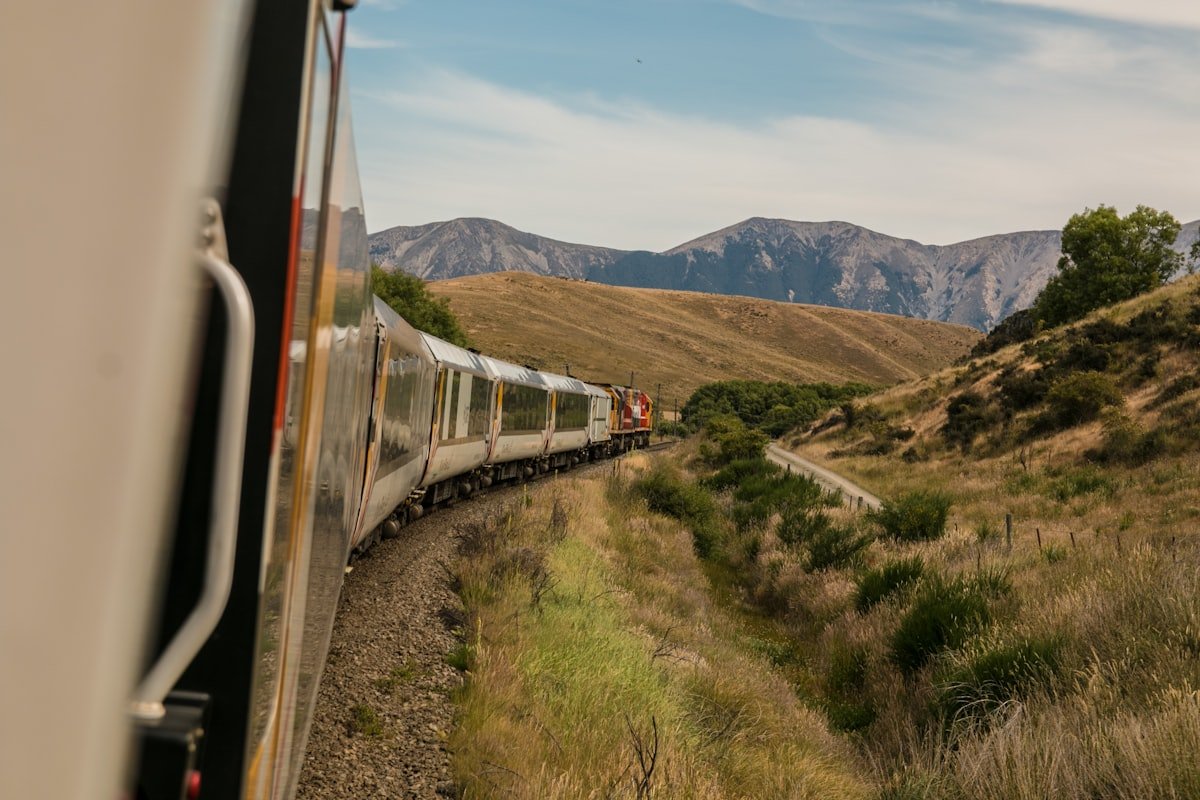
Resfeber meaning — the restless, feverish excitement that fills you the night before a journey begins: part anticipation, part anxiety, entirely its own thing.
Language: Swedish | IPA Pronunciation: /ˈreːs.feːbɛr/
Literal translation: “travel fever” — from resa (journey, travel) + feber (fever). The compound captures the physical quality of the feeling: a quickening pulse, a racing mind, a body that won’t settle into sleep.
Etymology of Resfeber Meaning in Swedish
The Swedish word resfeber is a compound of two roots. Resa traces back to Old Norse reisa, meaning “to raise” or “to travel” — the same root that gives English “raise” and is embedded in words like “arise.” In Scandinavian languages, resa evolved to mean specifically “to journey,” carrying the sense of lifting oneself out of the familiar and setting out toward something unknown. Feber comes from Latin febris (fever), which entered Swedish through ecclesiastical and medical Latin, sharing its origin with English “fever,” French fièvre, and Spanish fiebre.
The compound as a psychological descriptor appears in Swedish sources from the 19th century onward, as the Romantic era’s celebration of travel as a transformative, almost spiritual experience made the pre-departure state worth naming. Scandinavian Romantic literature was fascinated by the liminal — the threshold between the known self and the self that would be changed by the journey. Resfeber names that threshold as a felt experience.
It is worth noting that resfeber entered the global vocabulary almost entirely through travel writers and word enthusiasts sharing it online in the early 2010s — one of the clearest examples of a regional term going viral because it named something universally felt but previously unnamed in English. The root “fever” has a long history of being applied metaphorically in many languages — gold fever, spring fever — but resfeber crystallizes it into a single, specific pre-departure state.
Cultural Context
To understand why Sweden has a word for this, consider the Scandinavian relationship with travel and departure. The Nordic countries have long winters — real ones, with months of darkness, cold, and confinement. The prospect of leaving is not a casual thing. When spring comes, or when a journey is finally planned, the body responds. In Swedish culture, resfeber sits alongside words like friluftsliv (the outdoor life) and gluggavetur (window weather too cold to go out in) — a vocabulary built by a people who know both confinement and release and have named both precisely.
There is something almost ritualistic about resfeber in Scandinavian travel culture. It’s not a problem to be solved but a state to be inhabited. Experienced travelers recognize it as a form of excitement that is native to the best kind of journeys — the ones that matter enough to keep you awake. If you feel nothing before a trip, perhaps the trip doesn’t mean enough. Resfeber is a kind of calibration: the body telling you this departure matters. The Vikings understood movement as identity-forming — you were shaped by where you had been and what you had survived on the way there. Pre-departure anxiety was not weakness; it was attunement.
Modern Swedish travel culture has preserved resfeber as a term used without irony. It appears in travel journalism, personal essays, and everyday conversation as a way to describe the full emotional state of imminent departure — the packing and re-packing, the list-checking that becomes obsessive, the dreams that are half-nightmare and half-ecstasy. Poets and songwriters have used it; it appears in the titles of travel memoirs. It is, in short, the Swedish name for something every traveler knows.
How It’s Used Today
In contemporary Swedish, resfeber is used comfortably across formal and informal registers. You might find it in a newspaper travel column or in a text message the night before a friend’s flight. It requires no explanation between Swedish speakers — the compound is perfectly transparent, and the feeling it names is universally understood.
Jag har resfeber inför Japan-resan — kan inte sova. — “I have resfeber before the Japan trip — can’t sleep.”
Why English Has No Equivalent
English speakers exploring resfeber meaning often reach for “pre-trip jitters” — but jitters implies something to be calmed, a nervousness that should resolve. Resfeber doesn’t resolve; it transforms into the journey itself. “Wanderlust” describes the chronic desire to travel, not the acute state before a specific departure. “Anticipation” is too neutral — it could describe waiting for a dentist appointment. “Travel anxiety” pathologizes what is, in the Swedish understanding, a healthy and appropriate response to meaningful departure. Resfeber specifically names the state that is feverish but not sick, anxious but not afraid, restless but not troubled — a mixed state that English can only approximate in clumsy combinations.
Related Words
If resfeber resonates, you may find these related words from our dictionary equally evocative: Fernweh, the German ache for faraway places — the chronic version of what resfeber names acutely; Friluftsliv, the Norwegian philosophy of the outdoor life that travel enables; Hygge, the Danish art of cozy comfort — what you return to after the journey; Sehnsucht, the German word for a deep longing for something just out of reach; and Retrouvailles, the French word for the joy of reunion — the feeling that waits on the other side of resfeber.
Further Reading
- Etymonline — Fever: Traces the Latin and Proto-Indo-European roots of feber/fever, illuminating why this metaphor appears across so many languages for states of excited agitation.
- JSTOR: “Travel, Emotion and Embodiment” — Tourist Studies: A peer-reviewed study examining the affective dimensions of travel anticipation and how different cultures name and value the pre-departure emotional state.