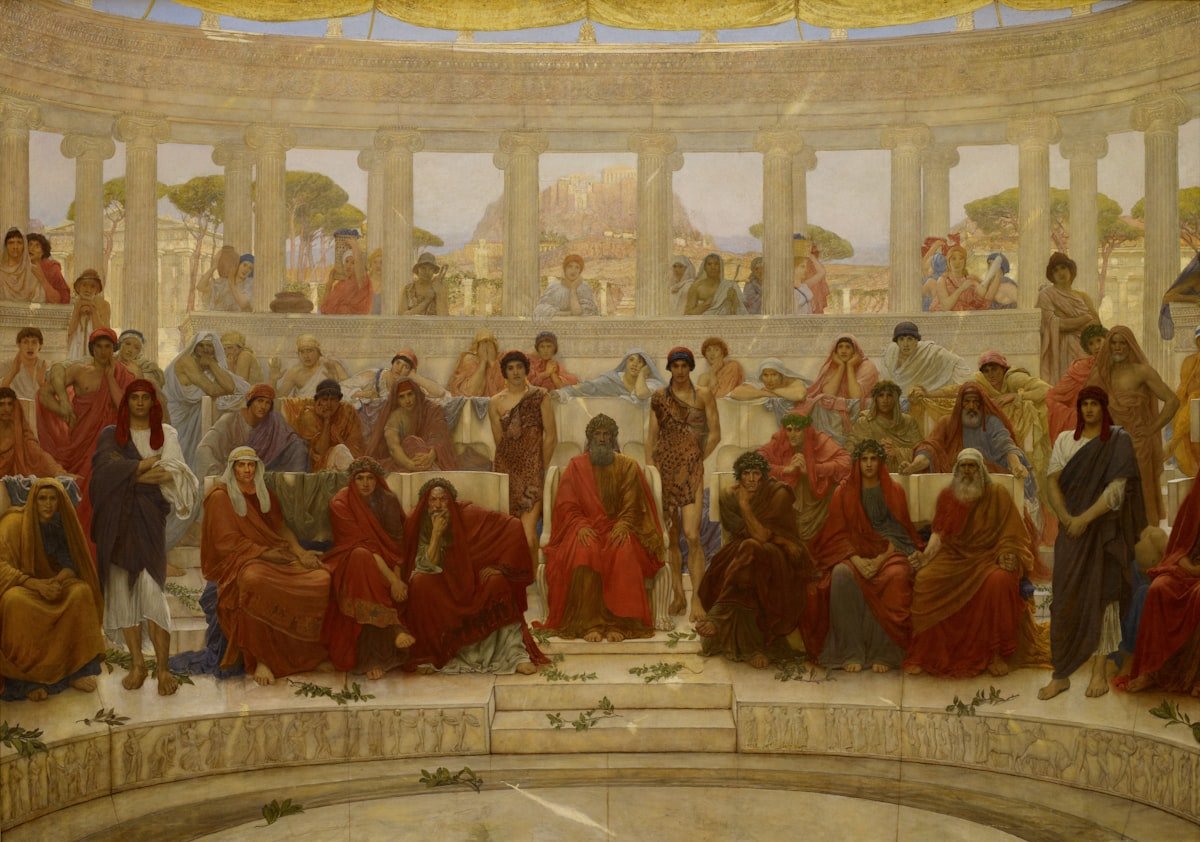
eudaimonia meaning — pronounced /juːˌdaɪ.məˈniː.ə/ — is the ancient Greek word for the highest form of human flourishing. Literally translated as “good spirit” or “good soul,” it describes a life lived in accordance with one’s deepest values and fullest potential.
Eudaimonia Meaning: Etymology and Origins
The word eudaimonia comes from two Greek roots: eu (good, well) and daimōn (spirit, inner self). Together they describe a state where one’s inner spirit is thriving — not merely happy, but genuinely excellent.
Aristotle placed eudaimonia at the center of his ethical philosophy in the Nicomachean Ethics, written around 340 BCE. For Aristotle, eudaimonia was not a feeling but an activity — the ongoing exercise of virtue in accordance with reason. It could not be achieved in a single moment; it required a whole life lived well.
Eudaimonia vs. Happiness
English translates eudaimonia as “happiness,” but this misses everything essential about the word. Modern happiness is subjective and temporary — a feeling that comes and goes. Eudaimonia is objective and enduring — a condition of one’s entire life.
When Aristotle called eudaimonia the telos (ultimate purpose) of human life, he meant something closer to “a life that goes well” than “a life that feels good.” You can be happy during a pleasant meal. You cannot achieve eudaimonia in an afternoon.
Eudaimonia Meaning in Modern Psychology
The eudaimonia meaning experienced a revival in the late 20th century through positive psychology. Researchers distinguish between two types of well-being: hedonic (pleasure-based) and eudaimonic (meaning-based).
Eudaimonic well-being is associated with purpose, personal growth, mastery, and authentic relationships. Studies show it predicts better health outcomes and greater resilience than purely hedonic pursuits. Carol Ryff’s model of psychological well-being — autonomy, environmental mastery, personal growth, positive relations, purpose in life, and self-acceptance — is built almost entirely around the eudaimonia concept.
Why the Eudaimonia Meaning Has No English Equivalent
English lacks a word for flourishing that carries both moral and psychological weight. “Happiness” is too shallow. “Well-being” is too clinical. “Fulfillment” comes closest but lacks the philosophical precision of eudaimonia, which implies living according to one’s arete — one’s excellence or virtue.
This gap matters. Without a word for eudaimonia, English speakers tend to reduce the good life to pleasure, comfort, or achievement — categories Aristotle would have considered means rather than ends. The concept invites a harder question: not “Am I happy?” but “Am I living as I should?”
Related Words
- Meraki — Greek for doing something with soul and creative passion
- Ikigai — Japanese for one’s reason for being
- Omoiyari — Japanese for empathetic consideration, a virtue within flourishing
- Kodawari — Japanese for uncompromising pursuit of excellence
- Amae — Japanese for dependent trust, a relational dimension of the good life