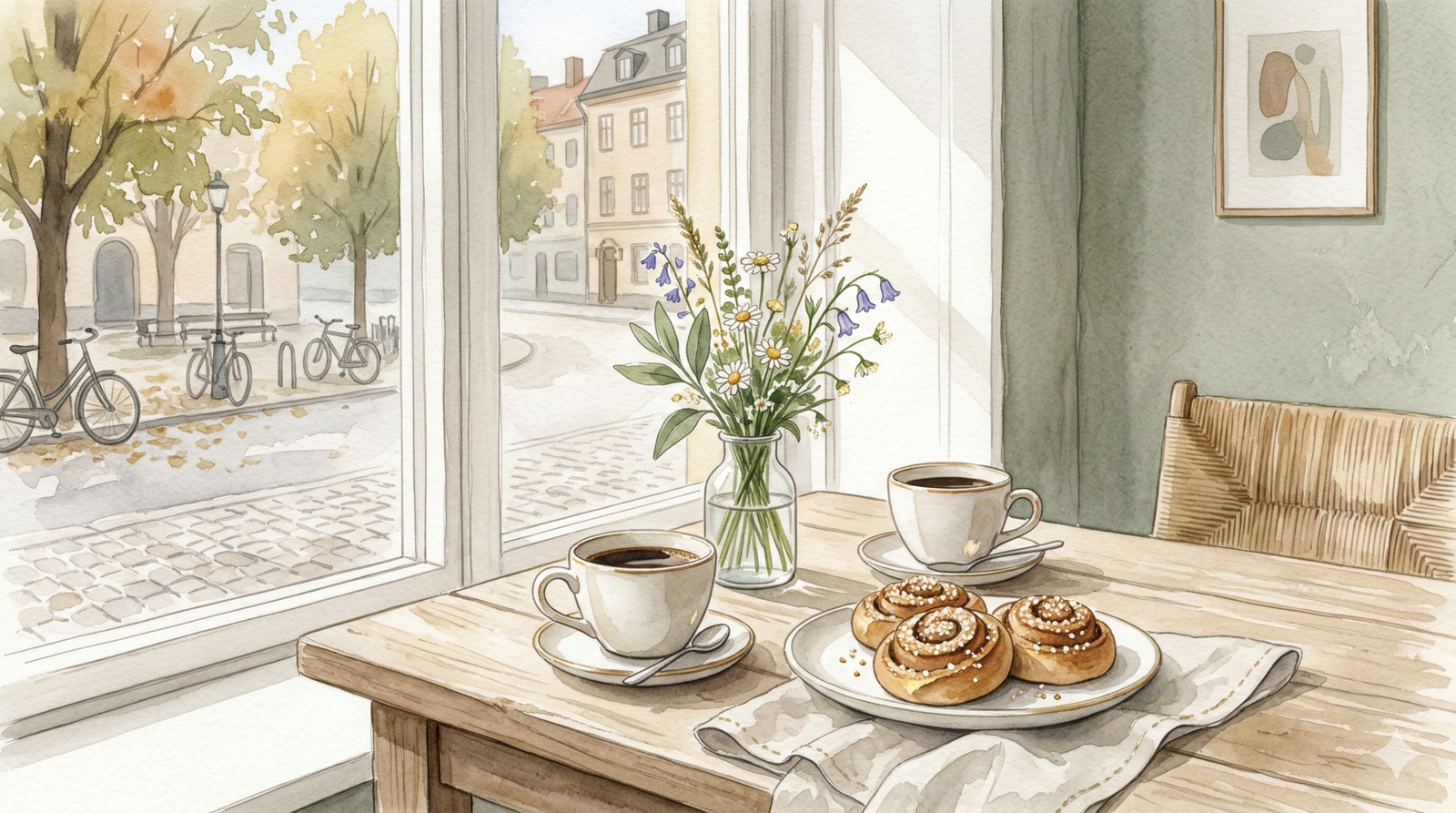
The fika meaning embodies one of Sweden’s most treasured cultural rituals — a coffee break that is really about so much more than coffee. The fika meaning describes the art of slowing down, sharing a cup of coffee and a pastry, and connecting with the people around you. In Sweden, fika is not optional; it is a daily institution woven into the fabric of work, family, and social life. Understanding the fika meaning reveals why Sweden consistently ranks among the happiest countries in the world — because Swedes have built intentional moments of human connection into every single day.
What Does Fika Mean? 4 Elements of Swedish Coffee Culture
The fika meaning has a playful etymological origin. The word is believed to be a 19th-century slang inversion of kaffi, an older Swedish dialect word for coffee — the syllables were swapped to create fi-ka. This linguistic playfulness mirrors the spirit of fika itself: informal, lighthearted, and fundamentally social. In modern Swedish, fika functions as both a noun (the break itself) and a verb (att fika — to have fika). The fika meaning has evolved beyond its coffee origins to encompass the entire social ritual — the conversation, the pastries (especially kanelbullar, cinnamon buns), and the deliberate pause from productivity. Swedes consume more coffee per capita than nearly any other nation, but the fika meaning is proof that quantity of consumption matters less than the quality of the moments built around it.
In Swedish workplaces, fika is not a luxury but a right — many companies schedule mandatory fika breaks, understanding that productivity actually increases when people step away from their desks to connect with colleagues. The tradition extends far beyond the office: families fika together on weekends, friends meet for fika at cozy cafés, and even first dates often revolve around the low-pressure ritual of sharing coffee and cake. The fika meaning reflects core Swedish values of equality and togetherness — during fika, hierarchies dissolve and everyone participates as equals. Swedish cafés are designed around the fika meaning, with warm lighting, comfortable seating, and an atmosphere that encourages lingering rather than rushing. The concept has gained global attention as workplaces worldwide recognize that building social connection into the workday benefits both well-being and performance.
Fika connects to other untranslatable words about warmth, balance, and social ritual. The Swedish concept of lagom provides the philosophical foundation — just the right amount of everything, including work and rest. The Danish hygge captures a similar atmosphere of cozy togetherness, while the Spanish sobremesa ritualizes connection around the dining table. The Dutch gezellig describes the warm conviviality that fika creates. For more on Swedish coffee culture, see Wikipedia’s overview of Swedish fika tradition.
The fika meaning offers a gentle but powerful challenge to the modern cult of productivity. In a world that celebrates busyness and treats breaks as wasted time, the fika meaning insists that pausing to connect with others is not just pleasant but essential. The fika meaning teaches us that the best ideas often emerge not during intense focus but during relaxed conversation over a warm cup of coffee. For anyone feeling overwhelmed by the pace of modern life, the fika meaning provides both permission and a blueprint for building daily moments of genuine human connection.
Swedish
FEE-kah
“A coffee break that’s really about socializing — a moment to slow down, share a cup of coffee and a pastry, and connect with others”
Literal Translation
Originally a 19th-century slang inversion of “kaffi” (coffee) — the syllables of “ka-ffi” were swapped to create “fi-ka”
Cultural Context
Fika is arguably the most beloved cultural institution in Sweden. It’s not just a coffee break — it’s a cornerstone of Swedish social and professional life. Most Swedish workplaces have mandatory fika breaks, typically at 10 AM and 3 PM. It’s considered essential for productivity, creativity, and team cohesion. The tradition involves coffee (Sweden has one of the highest coffee consumption rates in the world), something sweet (a kanelbulle/cinnamon bun is classic), and most importantly, conversation. To skip fika or rush through it is seen as antisocial. Major business decisions have been made during fika, friendships are maintained through fika, and relationships often begin with “ska vi fika?” (“shall we fika?”).
When Would You Use It?
When a colleague says “ska vi ta en fika?” they’re not just offering coffee — they’re inviting connection. It’s the moment you step away from your desk, put down your phone, and give someone your full attention over a warm drink and something sweet. Fika is the art of slowing down together.
Related Words
Hygge (Danish), Sobremesa (Spanish), Gezellig (Dutch), Lagom (Swedish)
Want to Learn Swedish?
Discover more beautiful Swedish words and phrases. Start your language journey today.
📬 Get a Beautiful Untranslatable Word in Your Inbox Every Week
Join fellow word lovers and discover words that English forgot.