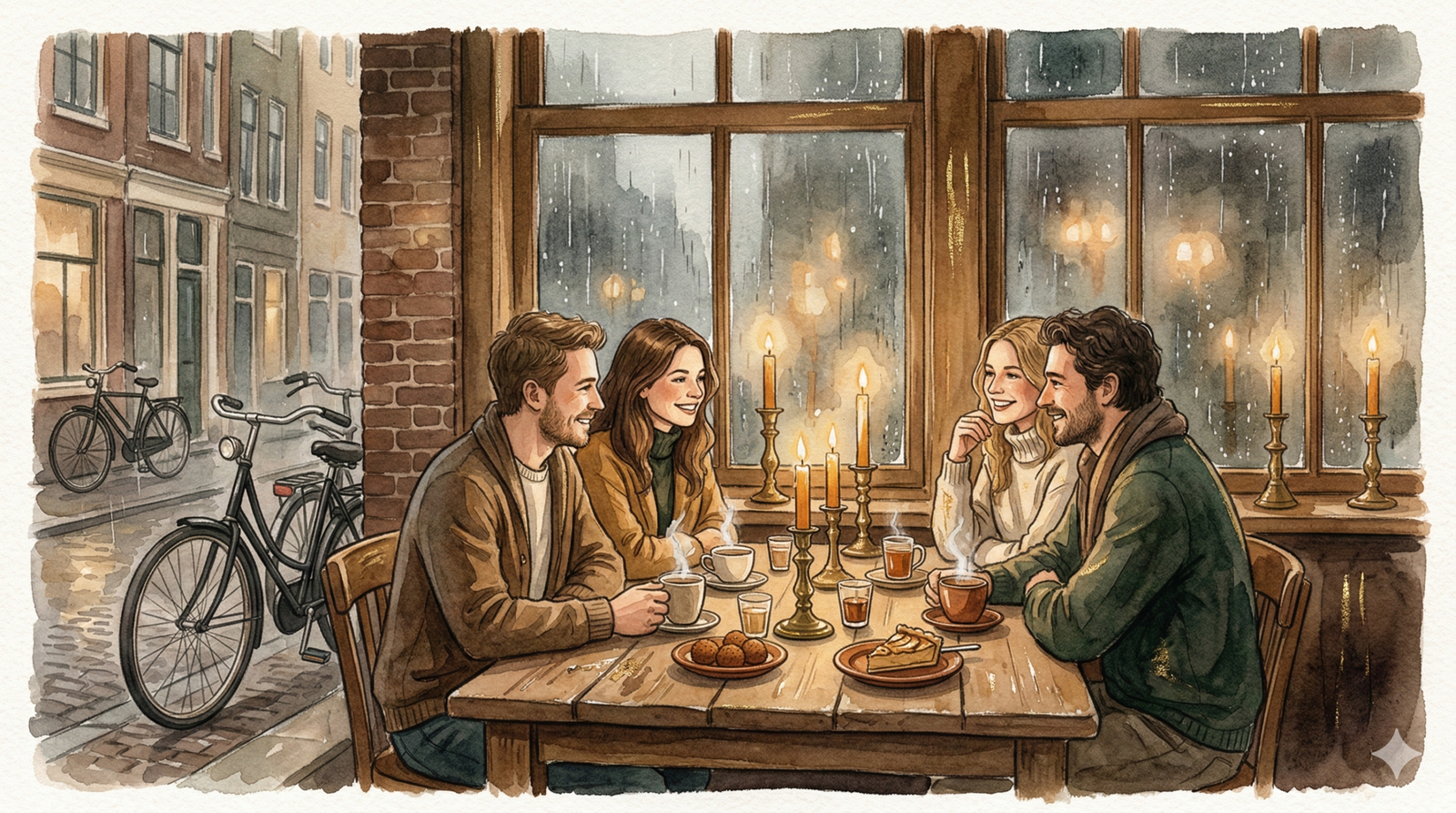
The gezellig meaning captures one of the most cherished aspects of Dutch culture — a warm, convivial atmosphere of togetherness that has no direct English equivalent. More than just “cozy,” the gezellig meaning encompasses the feeling of belonging, comfort, and social warmth shared with others. Whether gathered around a candlelit table with friends or enjoying a quiet evening at a brown café, this untranslatable Dutch word describes moments when connection and contentment merge into something beautiful.
What Does Gezellig Mean? 5 Dimensions of Dutch Warmth
The gezellig meaning has deep linguistic roots in Dutch history. The word derives from gezel, meaning “companion” or “fellow,” which itself traces back to the Middle Dutch geselle and ultimately to the Proto-Germanic *gasalją — one who shares a hall or dwelling. The suffix -ig transforms the noun into an adjective, so the gezellig meaning literally translates to “companion-like” or “having the quality of good companionship.” This etymology reveals that gezelligheid — the noun form — is fundamentally about human connection rather than physical comfort.
In the Netherlands, gezelligheid is not merely a concept but a way of life that shapes everything from architecture to social customs. Dutch homes are designed with large front windows and warm lighting specifically to create a gezellig atmosphere — a practice dating back centuries. The famous Dutch tradition of borrel (after-work drinks) and the ritual of coffee and cake with visitors embody the gezellig meaning perfectly. Even urban planning in cities like Amsterdam reflects this value, with intimate canal-side cafés and neighborhood squares designed to foster the social warmth that defines the gezellig meaning. The concept is so central to Dutch identity that its absence — ongezellig — is considered one of the harshest social criticisms in the Netherlands.
Gezellig shares thematic territory with several other untranslatable words about warmth and togetherness. The Danish concept of hygge captures a similar cozy atmosphere, while the Swedish lagom represents a complementary philosophy of balanced living. The Spanish tradition of sobremesa — lingering at the table after a meal — embodies a Mediterranean expression of the same social warmth, and the German waldeinsamkeit offers a contrasting solitary peace. For deeper exploration of Dutch linguistics, see Wikipedia’s overview of gezelligheid.
Understanding the full gezellig meaning requires experiencing it firsthand — the soft glow of candles, the sound of laughter among friends, the feeling that time slows down in the presence of genuine human connection. The gezellig meaning reminds us that some of life’s most precious moments cannot be planned or purchased — they arise naturally when people come together with warmth, openness, and the simple desire to enjoy each other’s company. This is why the gezellig meaning continues to resonate with people worldwide who seek a word for that ineffable feeling of social belonging.
Dutch (Gezellig) · Social & Community
Pronunciation: heh-ZELL-ikh
“A warm, convivial atmosphere of togetherness — the feeling of belonging, comfort, and social warmth shared with others.”
What Does Gezellig Mean?
Gezellig is a Dutch word that describes a warm, convivial atmosphere of togetherness and belonging. It encompasses the feeling of coziness shared with others, the comfort of familiar company, and the particular warmth that comes from genuine human connection.
The word has no direct English translation, though it is often compared to the Danish hygge. However, gezellig places greater emphasis on the social dimension — while hygge can be experienced alone, gezellig almost always involves other people. It is the feeling of a group, a gathering, a community coming together.
The Heart of Dutch Culture
Gezelligheid (the noun form) is considered a cornerstone of Dutch identity. The Netherlands is a small, densely populated country that has historically relied on cooperation and community to survive — from building dikes together to the golden age trading companies that required collective enterprise.
This history has shaped a culture that deeply values social connection and communal warmth. Dutch homes are famously designed with large front windows, not for exhibitionism but to signal openness and welcome. The concept of gezellig reinforces the idea that the best moments in life are shared.
Recognizing Gezelligheid
A place can be gezellig — a cozy pub with wooden beams and candlelight, a family kitchen filled with the aroma of freshly baked stroopwafels. A person can be gezellig — someone whose presence makes everyone feel welcome and at ease. An occasion can be gezellig — a birthday party where conversation flows easily and laughter is abundant.
What makes something gezellig is difficult to define precisely, but you know it when you feel it. It is the absence of pretension, the presence of warmth, the sense that everyone belongs and no one needs to perform. It is the opposite of awkward, formal, or lonely.
Gezellig in the Modern World
In an era of social media connections that often feel shallow, the Dutch concept of gezelligheid reminds us what genuine togetherness feels like. It cannot be manufactured through perfectly curated Instagram posts or carefully managed personal brands. Gezelligheid requires authenticity, vulnerability, and the willingness to simply be present with others.
The Dutch gift to the world is this word — a reminder that the warmest moments in life are not the impressive ones but the comfortable ones, not the spectacular ones but the shared ones. In a world that often equates excitement with happiness, gezellig whispers that sometimes the greatest joy is found in a quiet room full of people who feel like home.