Gökotta Meaning & Definition
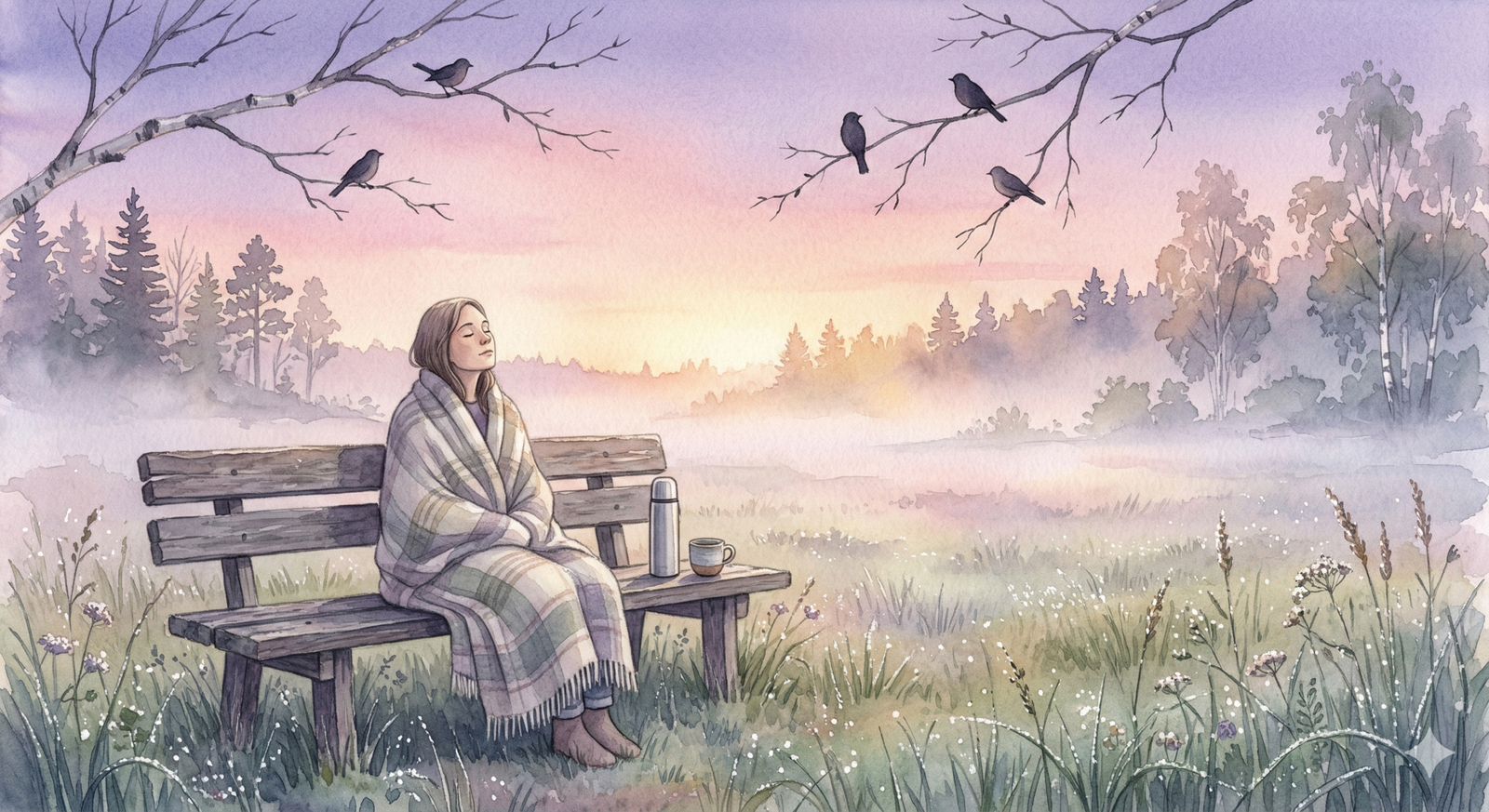
The gökotta meaning captures one of the most tender human impulses — to rise before the world wakes and step outside into the hush of dawn, just to hear the birds sing. It is not merely early rising or birdwatching. Gökotta is the deliberate act of greeting the morning on its own terms, surrendering to the stillness before clocks and obligations take hold. In Swedish culture, this word carries the weight of a small, sacred ritual — a reminder that some of life’s most profound moments happen when we simply stop and listen.
Pronunciation
IPA: /jøːˌkɔ.ta/
Audio: Recommended — listen on Forvo for native Swedish pronunciation. The gö sounds close to “yuh” with rounded lips (like the French eu), ko rhymes with “caw,” and tta is a short, clipped “tah.” The full word flows as: YUH-kaw-tah.
Etymology
The gökotta meaning is built from two Old Swedish roots that together paint a vivid picture. Gök is the Swedish word for cuckoo — the migratory bird whose distinctive two-note call has announced the arrival of spring across Scandinavia for centuries. Otta is an archaic Swedish word for the liminal hour between night and dawn, derived from Old Norse ótta. In Iceland, ótta historically referred to 3 o’clock in the morning under the old system that divided night and day into three-hour segments.
The word’s Indo-European root reaches deep into Germanic language history. Old Norse ótta produced Gothic ûhtwô, Old High German uohta, and Old English ūhta — all describing that mysterious threshold between darkness and first light. The same root connects to Sanskrit aktu, meaning “night” or “dark.” So gökotta literally means “cuckoo dawn” — the hour when the cuckoo first calls, and by extension, the act of being present for that fleeting, unrepeatable moment.
Literal Translation
Gök (cuckoo) + otta (early morning before dawn) = “cuckoo dawn” — the act of rising at the earliest hour to hear the cuckoo’s first song. While the literal meaning points to one specific bird, the gökotta meaning has expanded over time to embrace all birdsong at dawn, and more broadly, the entire sensory experience of being outside in the predawn world.
Cultural Context
The gökotta meaning is inseparable from Sweden’s deep relationship with nature and seasonal rhythms. After months of Scandinavian winter darkness, the return of birdsong in spring is not just pleasant — it is emotionally momentous. The tradition of gökotta centers on Ascension Day (Kristi himmelsfärdsdag), which falls 40 days after Easter in late May or early June. This date coincides perfectly with the cuckoo’s return from its winter migration in Africa, making it the ideal morning to step outside and welcome spring’s most iconic voice.
Around a century ago, gökotta became a popular communal celebration across Sweden. Churches in many regions moved their Ascension morning services outdoors so congregations could hear the cuckoo sing during worship. Communities organized dawn excursions into forests and meadows, where families would gather with blankets and thermoses of coffee to sit in collective silence, waiting for the first call. In Swedish folk tradition, the direction from which you first hear the cuckoo carries meaning — from the north, it foretells sorrow; from the south, good fortune; from the east, consolation; and from the west, the best omen of all.
Today, gökotta has evolved beyond its specific Ascension Day origins into a broader Swedish philosophy of intentional early morning communion with nature. It connects to other Scandinavian wellbeing concepts — the Norwegian friluftsliv (open-air living), the Danish hygge (cozy contentment), and the Swedish lagom (just the right amount). But gökotta is perhaps the most poetic of all, because it asks nothing more than your presence and your willingness to listen.
Modern Usage Example
Swedish: “Vi ska gökotta imorgon — väckarklockan är satt till fyra.”
English: “We’re going to gökotta tomorrow — the alarm is set for four.”
Swedish: “Det finns inget bättre sätt att börja dagen än med en gökotta vid sjön.”
English: “There’s no better way to start the day than with a gökotta by the lake.”
Related Words
If the gökotta meaning resonates with you, explore these kindred concepts from our dictionary: Komorebi (Japanese) — sunlight filtering through leaves, another word for those who find poetry in nature’s quiet details. Lagom (Swedish) — the principle of “just enough,” the same understated Swedish wisdom that makes gökotta about listening rather than seeking. Waldeinsamkeit (German) — the feeling of being alone in the woods, a kindred solitude. Fika (Swedish) — the coffee ritual that often follows a good gökotta, because in Sweden, every meaningful pause deserves a warm cup.
Why English Needs This Word
English has “early bird” and “dawn chorus” and “morning person,” but none of these capture what gökotta holds. The gökotta meaning is not about productivity or discipline — it is not about waking early to get more done. It is about waking early to get less done, to subtract everything except the sound of the world coming alive. In a culture that monetizes every waking hour, gökotta offers a radical proposition: that some mornings exist not to be seized, but to be received. The birds will sing whether or not you are listening. But something inside you changes when you choose to be there for it.