Japanese
Amae meaning: the Japanese word for the felt sense of being able to depend on another person’s affection — the trust that they will accept and indulge you. Below: the etymology of Amae, the cultural roots in Japanese psychology, modern usage in attachment theory, and why English has no equivalent.
/aˈma.e/ — ah-MAH-eh (甘え)
Literal translation: “to be sweet upon” — the noun form of the verb amaeru (“to depend on or presume upon another’s love”), which is itself derived from the adjective amai (“sweet”). Together: the noun for the emotional state of leaning, with confidence, on another person’s willingness to indulge you.
Etymology of Amae
The root of amae is the adjective amai (甘い), “sweet” — not just the taste but the broader sense of softness, indulgence, lenience. From amai the language built the verb amaeru (甘える), which describes the action of presuming on someone’s sweetness toward you: a child climbing onto a parent’s lap, a friend asking a favor with full confidence it will be granted, a partner expecting a small daily kindness without having to ask for it. The noun amae names the inner condition that makes any of those behaviors possible.
The word is written with a single Chinese character, 甘, which carries the same broad sense of “sweet” in classical Chinese as well, but the specifically psychological use of amae as a name for an emotional state is a distinctly Japanese development. In modern Japanese it functions as a normal everyday noun — you can say a child has a lot of amae, or that a marriage allows for healthy amae — without any sense that the speaker is reaching for technical vocabulary.
The word was taken into international academic vocabulary in 1971 by the Japanese psychoanalyst Takeo Doi, whose book Amae no Kōzō (translated into English as The Anatomy of Dependence) argued that amae is a foundational structure of Japanese emotional life and a category that Western psychology was missing. Doi traced the word’s psychological texture — the sense of being held safely enough that you can let your guard down — and proposed it as a concept that Japanese society had named clearly while Western languages had only named in pieces.
Cultural Context
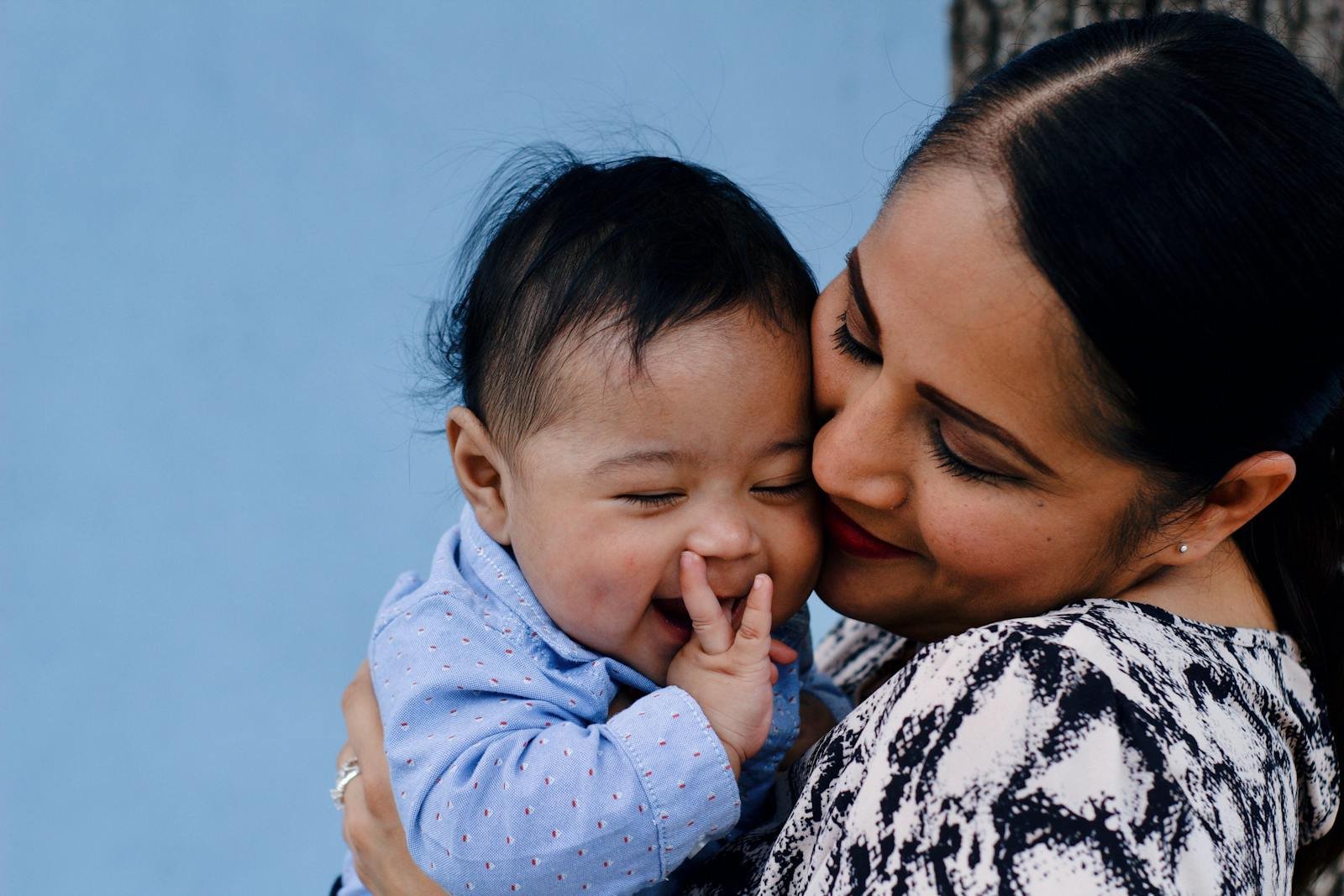
Amae sits inside a particular Japanese view of human relationships: that mature affection includes some space for benevolent dependence, and that the small acts of leaning on another person are not signs of weakness but of trust. The classical example is the relationship between a young child and their mother — the child reaches up to be carried and the mother carries them — but Japanese thought has never restricted the concept to childhood. Adult amae appears in long marriages, in close friendships, in mentor-student relationships, and in the small daily exchanges between the same coffee shop owner and the same regular customer. The word names a kind of relational warmth that does not require either party to be self-sufficient.
This is part of why Doi’s book made waves when it was first translated. Western psychology, especially in its mid-twentieth-century American form, had treated dependence as something to be outgrown — the goal of healthy development was autonomy, and “dependent personality” was a diagnostic category. Doi pointed out that Japanese psychology took for granted that interdependence was a feature, not a bug, and that there was a specific word for the state of being healthily dependent. The word amae entered Western attachment theory through Doi and has since been used to extend John Bowlby’s framework into adult relationships in ways the original English vocabulary couldn’t quite reach.
Amae also has a darker register in Japanese cultural commentary. Excessive amae — presuming too much, leaning too hard — is understood as a real social problem, and Japanese has separate vocabulary (amaeta, amaekko) for someone who has crossed that line. The word is therefore not a simple endorsement of dependence but a precise name for a state that can be healthy or unhealthy depending on the relationship. The precision is the point.
How Amae Is Used Today
Amae appears in everyday Japanese conversation, in psychotherapy, in parenting magazines, in advertising for everything from baby products to retirement homes, and in the quiet pop-psychology shelves of Tokyo bookshops. It also shows up regularly in international attachment-theory writing, cross-cultural psychology textbooks, and English-language essays on the linguistic limits of Western emotional vocabulary. The word travels well because the experience travels well — readers from any culture recognize the feeling as soon as the word names it.
あの子はちょっと甘えん坊だね — でも、それが家族の良いところだよ。
— “That child is a bit dependent (amaenbō) — but that’s the good thing about family.”
Why English Has No Equivalent for Amae
English reaches for “dependence” (clinical, faintly pejorative), “trust” (too narrow, too cognitive), “secure attachment” (technical, three words long), and “emotional reliance” (close but cold). None of them carry the warmth Doi was trying to name — the affectionate, mutually accepted leaning of one person on another’s affection. The reason is partly cultural: English-language psychology grew up in cultures that valorized self-reliance, and its emotional vocabulary reflects that bias. Amae names a relational virtue English doesn’t quite have a word for.
Related Words
- For the Japanese sense of having a purpose worth getting up for — the deeper sibling of amae’s relational warmth — see ikigai.
- For the bittersweet Japanese awareness of impermanence that often colors close relationships, see mono no aware.
- For the Korean word that names a similar relational bond — the deep connection that grows over time and can’t be willed into being — see jeong.
- For the Japanese aesthetic principle that mended things grow more beautiful through their repair — a relational metaphor amae quietly sits inside — see kintsugi.
- Browse more from the same vocabulary in our Japanese collection.
Further Reading
- Encyclopædia Britannica — Doi Takeo (the Japanese psychoanalyst whose 1971 book The Anatomy of Dependence introduced amae to international psychology).
- Etymonline — sweet (the Indo-European root of “sweet,” which the Japanese amai/amae shares thematically — sweetness as both a taste and a relational quality, a near-universal linguistic move).